What if the truth a person has spent an entire lifetime believing is nothing more than a comforting lie?
For Amir, the past has always been a blank space. He knows only that he was abandoned as a baby and raised without the parents whose absence has shaped much of his life. He has always consoled himself with one explanation: perhaps his parents loved him, perhaps circumstances forced them to leave him, and perhaps one day the truth would make sense.
Then comes a dream.
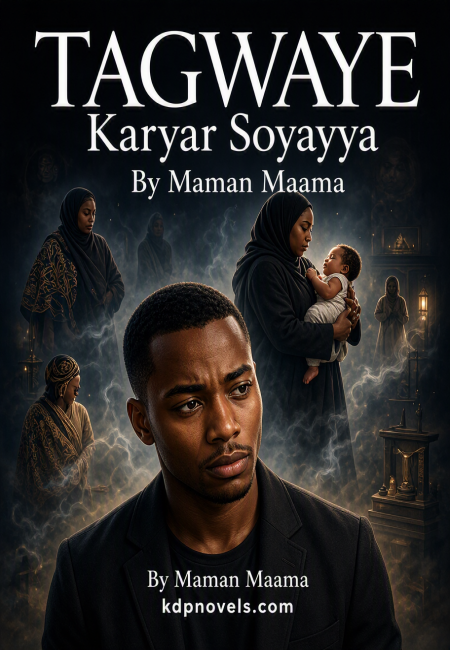
In the dream, Amir is no longer a grown man. He is a helpless newborn being carried through the darkness by a woman he instinctively knows is his mother. He desperately wants her to look at him. He wants an explanation. He wants affection. Instead, he experiences something far more disturbing than abandonment.
He experiences rejection.
When he wakes, the dream refuses to leave him. Was it merely a nightmare, or has his mind somehow uncovered a memory buried deeper than consciousness? And if what he saw was real, what does that mean for everything he has believed about his mother, his childhood, and himself?
But Amir's mystery is only one thread in a much larger story.
Summary
TAGWAYE is a sweeping story built around family, ambition, love, poverty, wealth, loyalty and the complicated choices that shape people's destinies. The story reaches backward into the lives of several families before gradually bringing their worlds closer together. It does not simply present heroes and villains. Instead, it explores people from different sides of life, including those whose choices may be difficult to defend, yet whose motives are rooted in wounds, desires, fear or ambition.
One of the central stories begins with Aminu and Hassana, a married couple whose happiness is shattered when Hassana dies after giving birth to identical twin boys, Hassan and Hussain. The two brothers are left without their mother and are eventually raised by Amina, Hassana's younger sister, who becomes their stepmother despite being little more than a teenager herself. What begins as an arrangement born from tragedy gradually becomes a deep bond of family and sacrifice. Amina pours herself into the children, eventually becoming the mother of a large family while raising the twins alongside their younger sisters.
When Aminu later dies, the family faces another devastating blow. Suddenly, Amina must consider how to provide for seven children with no secure income and no obvious path forward. The twins respond to their father's death in completely different ways. Hassan is cautious, analytical and concerned about protecting what remains of their father's property. Hussain is fearless, restless and convinced that waiting for the future will only allow opportunities to disappear. He wants to take his inheritance, enter business and build something enormous.
Amina eventually gives him the opportunity he desperately wants. What follows proves that Hussain's confidence is not entirely empty. His determination and instinct for business transform his modest inheritance into something several times greater. Years later, he has become a wealthy and ambitious businessman with multiple companies and plans for even greater expansion. Yet his success does not make him identical to his brother. Hassan remains the cautious thinker, constantly warning Hussain about exposure, trust and the dangers of assuming that everyone around them has good intentions. Their personalities clash repeatedly, but beneath every argument lies an extraordinary brotherly bond.
Another family introduces an entirely different kind of struggle. Yusufa and Sa'adatu begin their marriage with little wealth but abundant love. Sa'adatu is deeply religious, disciplined and devoted to the Qur'an, while Yusufa works whatever jobs he can find to support their growing family. Their twin daughters, Ruqayyah and Sumayya, inherit very different personalities. Sumayya is patient, compassionate and morally conscious. Ruqayyah, on the other hand, is fiercely ambitious, outspoken and increasingly frustrated by poverty.
Ruqayyah does not merely dislike being poor. She resents what poverty prevents her from having. She dreams of money, comfort, beautiful things and a life far removed from the hardship of her childhood. Her ambition begins to influence the way she views right and wrong, and her willingness to cross boundaries creates a dangerous contrast between the sisters. Yet Ruqayyah is not presented as a simple villain. She is a young woman carrying frustration, insecurity and an intense desire to change her circumstances, making her choices all the more complicated.
Then there is Hussain's love story with Gimbiya Fatima, a woman from a royal family whose life is surrounded by privilege, education and status. Their relationship begins unexpectedly and develops into a powerful romance. Hussain is captivated by her almost immediately, while Fatima gradually accepts the man behind the charm and confidence. She supports his ambitions rather than being impressed solely by his wealth, and their relationship becomes one of the most promising unions in the story.
Yet even their love comes with complications.
Hassan remains cautious about Fatima, not because he necessarily sees her as a bad person, but because he approaches every major decision with careful suspicion. Hussain, meanwhile, believes life is too short to spend constantly planning for a future that may never arrive. His philosophy is simple: build something meaningful, enjoy the present and leave behind a name that will survive him.
As these families and personalities develop, another character enters the story in a seemingly ordinary encounter. Adam meets Ruqayyah and Sumayya when they are trying to avoid paying a taxi fare. What begins as an embarrassing confrontation reveals much more about Ruqayyah's character and introduces a new connection that may become significant later. Adam sees through her deception, while Sumayya is caught between loyalty to her twin and the knowledge that what Ruqayyah is doing is wrong.
Meanwhile, beneath the wealth, romance and family celebrations, another story is quietly unfolding. The mysterious nightmare that opened the novel raises questions that cannot easily be dismissed. Somewhere between forgotten memories, family histories and hidden decisions lies an explanation for Amir's abandonment. The deeper the story goes, the more it becomes clear that the characters' present lives are connected to choices made long before they understood their consequences.
Genre and Setting
TAGWAYE blends family drama, romance, psychological mystery, social drama and generational storytelling. Its strength comes from moving between different social realities rather than remaining inside a single world.
The story travels through Kaduna and other parts of Northern Nigeria, moving between modest homes where families struggle to stretch every meal, wealthy compounds belonging to successful businessmen, schools, workplaces, businesses and royal surroundings. The contrast between these environments gives the novel much of its emotional power. Poverty is not treated merely as a background detail, just as wealth is not presented as an automatic guarantee of happiness.
The novel also moves backward in time to reveal how its characters became who they are. This structure allows readers to discover the roots of present conflicts gradually, making family history an essential part of the mystery.
Core Themes
Family and Sacrifice
At its heart, TAGWAYE is deeply concerned with family. It asks what truly makes someone a parent, a sibling or a child. Blood relationships matter, but sacrifice, loyalty and responsibility matter just as much. Amina's devotion to children who are not biologically hers demonstrates how motherhood can be created through commitment, while the relationship between Hassan and Hussain shows how powerful sibling loyalty can become.
Poverty and Ambition
Ruqayyah's dissatisfaction with poverty provides one of the novel's most interesting examinations of ambition. The story does not simply condemn the desire for wealth. Instead, it explores what happens when the hunger for a better life becomes strong enough to challenge a person's principles.
Hussain represents another side of ambition. His desire to build businesses and establish a lasting legacy turns him into a symbol of relentless determination. Yet the story also asks whether success without caution can eventually become a weakness.
Love and Marriage
Romantic love appears in several forms throughout the novel. Some relationships grow from affection and shared values, while others are influenced by family expectations, social position and personal ambition. Hussain and Fatima's relationship particularly explores the meeting of wealth, royalty, business success and genuine affection.
The Past and Its Secrets
The opening nightmare establishes one of the novel's strongest mysteries. Memory, abandonment and hidden history become important questions. The story suggests that the past does not necessarily disappear simply because people refuse to speak about it.
Morality and Choice
Characters repeatedly find themselves at crossroads. Sumayya understands the difference between right and wrong even when loyalty makes it difficult to oppose her sister. Hassan constantly weighs risk against opportunity. Hussain believes action is better than hesitation. Ruqayyah believes poverty itself justifies her determination to escape it.
These conflicting philosophies make the characters unpredictable because each person has a different definition of what is acceptable.
Key Characters
Hussain is ambitious, confident, charming and fearless. From childhood, he possesses an unusual attraction to business and opportunity. His willingness to take risks eventually transforms his inheritance into substantial wealth. He loves his family deeply, especially his twin brother, and his relationship with Fatima gives another dimension to his otherwise restless personality. His greatest strength is his courage, but that same confidence may become dangerous if he begins to underestimate people.
Hassan is Hussain's opposite in temperament. Thoughtful, cautious and analytical, he prefers careful planning to impulsive action. He constantly challenges his brother's decisions, particularly when money, business or relationships are involved. Yet beneath his reserved nature is an enormous capacity for loyalty. His connection with Hussain is one of the emotional pillars of the story.
Ruqayyah is perhaps one of the most unpredictable characters. Intelligent, bold and ambitious, she refuses to accept poverty as the permanent condition of her life. Her hunger for wealth pushes her toward morally questionable decisions, but her character is more complicated than simple wickedness. She is a young woman struggling against circumstances she deeply resents.
Sumayya serves as a moral contrast to her twin sister. She is patient, thoughtful and compassionate, often trying to prevent Ruqayyah from making decisions that could harm them. Her greatest conflict is that loving her sister does not mean she agrees with everything she does.
Gimbiya Fatima is intelligent, composed and accustomed to privilege, yet she is not portrayed as someone whose heart depends on wealth. Her relationship with Hussain develops because she appreciates the person he is, not merely what he owns. Her royal background also places additional expectations around her future marriage.
Amina embodies sacrifice. She enters marriage under painful circumstances and grows into the mother of a large family. Her concern for the children, particularly after Aminu's death, demonstrates the strength required to carry a family through uncertainty.
Sa'adatu represents patience, faith and maternal devotion. Despite living with limited resources, she works to support her family and places great emphasis on raising her children properly. Her struggle with Ruqayyah reveals how difficult parenting can become when love alone is not enough to control a child's choices.
Yusufa is a hardworking father whose greatest concern is providing for his family. His willingness to take whatever honest work is available demonstrates the dignity of labour, even when the financial rewards are small.
Adam enters the story through an unexpected encounter with Ruqayyah and Sumayya. His first meeting with them exposes their differences and hints that his connection with the sisters may become more important than it initially appears.
Amir remains one of the story's greatest mysteries. His nightmare introduces a painful question about his birth and abandonment. Whether his vision is merely a dream, a buried memory or something else entirely is a question that keeps the story surrounded by uncertainty.
Analytics and Insight
The most compelling feature of TAGWAYE is its use of contrasting characters. Hassan and Hussain are twins who share the same upbringing but interpret life in radically different ways. Ruqayyah and Sumayya are also twins whose personalities develop in opposite directions. Through these pairs, the novel examines the question of whether people are shaped more by circumstance, personality or choice.
The novel also uses wealth and poverty as opposing environments rather than simple measures of happiness. Hussain achieves the financial success Ruqayyah dreams about, yet his wealth introduces its own vulnerabilities. Ruqayyah begins with almost nothing, but her determination to escape poverty creates moral complications. Their parallel journeys make the story particularly interesting because they demonstrate that wanting wealth and knowing what to do with wealth are two entirely different things.
Another important narrative strength is the gradual connection between seemingly separate storylines. The opening mystery surrounding Amir appears detached from the family histories that follow, while the stories of Hussain, Hassan, Ruqayyah, Sumayya, Adam and Fatima initially seem to occupy different worlds. As the narrative develops, however, the reader is encouraged to look for the invisible threads connecting people, choices and generations.
The title TAGWAYE, meaning twins, becomes especially significant because twins appear at the heart of several major family stories. Yet the novel uses twinhood for more than physical resemblance. It repeatedly demonstrates how two people can share the same blood, childhood and circumstances while developing completely different identities.
A Thought to Carry Into the Story
"Sometimes the person who looks like your greatest blessing may be carrying a secret capable of changing everything you thought you knew."
Why Readers May Find TAGWAYE Compelling
TAGWAYE is not simply a romance, and it is not merely a family story. It is a layered narrative about people trying to become something greater than the circumstances into which they were born.
It asks difficult questions about what people owe their families, how far ambition should go, whether poverty can excuse wrongdoing, whether wealth can protect anyone from betrayal, and whether love is strong enough to survive differences in personality, status and ambition.
Most importantly, the story does not make it easy to decide who is completely right and who is completely wrong. Its characters carry their own reasoning, their own wounds and their own desires. Some will make decisions readers admire. Others will make decisions readers condemn. Some may begin as characters readers distrust and eventually become people they understand, while others may appear harmless until their choices reveal another side.
And somewhere beneath all of it lies Amir's nightmare.
A mother. A newborn child. A deserted road in the darkness. An orphanage gate. And a memory that may not be a memory at all.
The more the characters chase their dreams, protect their families and attempt to control their futures, the closer they may come to truths that have been waiting for them all along.
TAGWAYE is a story of twins, families, ambition, love, poverty, wealth, secrets and consequences. It is a story where the past refuses to remain buried and where one decision can create consequences that reach far beyond the person who made it.








![<? $row['name']; ?>](https://kdpnovels.com/Public/thumb/225x325/ebook/2026/04/kdp-velvet-76-rayuwa-da-gi-i-0187303be8.webp)
![<? $row['name']; ?>](https://kdpnovels.com/Public/thumb/225x325/ebook/2026/04/kdp-velvet-78-karuwan-cikin-gida-book-2-4162a6ec19.webp)
![<? $row['name']; ?>](https://kdpnovels.com/Public/thumb/225x325/ebook/2026/04/kdp-velvet-79-ar-goggo-b3f15a0ce3.webp)
![<? $row['name']; ?>](https://kdpnovels.com/Public/thumb/225x325/ebook/2026/04/kdp-velvet-82-rayuwar-mace-e1d7de2487.webp)
![<? $row['name']; ?>](https://kdpnovels.com/Public/thumb/225x325/ebook/2026/04/kdp-velvet-83-rana-daya-book-1-beba7251c1.webp)
![<? $row['name']; ?>](https://kdpnovels.com/Public/thumb/225x325/ebook/2026/04/kdp-velvet-91-kida-a-ruwa-3-472106cedd.webp)
![<? $row['name']; ?>](https://kdpnovels.com/Public/thumb/225x325/ebook/2026/04/kdp-velvet-93-rainon-soja-book-1-286bef18e2.webp)
![<? $row['name']; ?>](https://kdpnovels.com/Public/thumb/225x325/ebook/2026/04/kdp-velvet-96-ranar-naka-complt-1a5ed3d476.webp)
![<? $row['name']; ?>](https://kdpnovels.com/Public/thumb/225x325/ebook/2026/04/kdp-velvet-97-cutarwa-complt-d352334231.webp)
![<? $row['name']; ?>](https://kdpnovels.com/Public/thumb/225x325/ebook/2026/04/kdp-velvet-98-babu-so-619172ab35.webp)
![<? $row['name']; ?>](https://kdpnovels.com/Public/thumb/225x325/ebook/2026/04/kdp-velvet-99-rayuwa-da-gi-i-076b92a60b.webp)
TAGWAYE
By Maman Maama
The Opening
What if the truth a person has spent an entire lifetime believing is nothing more than a comforting lie?
For Amir, the past has always been a blank space. He knows only that he was abandoned as a baby and raised without the parents whose absence has shaped much of his life. He has always consoled himself with one explanation: perhaps his parents loved him, perhaps circumstances forced them to leave him, and perhaps one day the truth would make sense.
Then comes a dream.
In the dream, Amir is no longer a grown man. He is a helpless newborn being carried through the darkness by a woman he instinctively knows is his mother. He desperately wants her to look at him. He wants an explanation. He wants affection. Instead, he experiences something far more disturbing than abandonment.
He experiences rejection.
When he wakes, the dream refuses to leave him. Was it merely a nightmare, or has his mind somehow uncovered a memory buried deeper than consciousness? And if what he saw was real, what does that mean for everything he has believed about his mother, his childhood, and himself?
But Amir's mystery is only one thread in a much larger story.
Summary
TAGWAYE is a sweeping story built around family, ambition, love, poverty, wealth, loyalty and the complicated choices that shape people's destinies. The story reaches backward into the lives of several families before gradually bringing their worlds closer together. It does not simply present heroes and villains. Instead, it explores people from different sides of life, including those whose choices may be difficult to defend, yet whose motives are rooted in wounds, desires, fear or ambition.
One of the central stories begins with Aminu and Hassana, a married couple whose happiness is shattered when Hassana dies after giving birth to identical twin boys, Hassan and Hussain. The two brothers are left without their mother and are eventually raised by Amina, Hassana's younger sister, who becomes their stepmother despite being little more than a teenager herself. What begins as an arrangement born from tragedy gradually becomes a deep bond of family and sacrifice. Amina pours herself into the children, eventually becoming the mother of a large family while raising the twins alongside their younger sisters.
When Aminu later dies, the family faces another devastating blow. Suddenly, Amina must consider how to provide for seven children with no secure income and no obvious path forward. The twins respond to their father's death in completely different ways. Hassan is cautious, analytical and concerned about protecting what remains of their father's property. Hussain is fearless, restless and convinced that waiting for the future will only allow opportunities to disappear. He wants to take his inheritance, enter business and build something enormous.
Amina eventually gives him the opportunity he desperately wants. What follows proves that Hussain's confidence is not entirely empty. His determination and instinct for business transform his modest inheritance into something several times greater. Years later, he has become a wealthy and ambitious businessman with multiple companies and plans for even greater expansion. Yet his success does not make him identical to his brother. Hassan remains the cautious thinker, constantly warning Hussain about exposure, trust and the dangers of assuming that everyone around them has good intentions. Their personalities clash repeatedly, but beneath every argument lies an extraordinary brotherly bond.
Another family introduces an entirely different kind of struggle. Yusufa and Sa'adatu begin their marriage with little wealth but abundant love. Sa'adatu is deeply religious, disciplined and devoted to the Qur'an, while Yusufa works whatever jobs he can find to support their growing family. Their twin daughters, Ruqayyah and Sumayya, inherit very different personalities. Sumayya is patient, compassionate and morally conscious. Ruqayyah, on the other hand, is fiercely ambitious, outspoken and increasingly frustrated by poverty.
Ruqayyah does not merely dislike being poor. She resents what poverty prevents her from having. She dreams of money, comfort, beautiful things and a life far removed from the hardship of her childhood. Her ambition begins to influence the way she views right and wrong, and her willingness to cross boundaries creates a dangerous contrast between the sisters. Yet Ruqayyah is not presented as a simple villain. She is a young woman carrying frustration, insecurity and an intense desire to change her circumstances, making her choices all the more complicated.
Then there is Hussain's love story with Gimbiya Fatima, a woman from a royal family whose life is surrounded by privilege, education and status. Their relationship begins unexpectedly and develops into a powerful romance. Hussain is captivated by her almost immediately, while Fatima gradually accepts the man behind the charm and confidence. She supports his ambitions rather than being impressed solely by his wealth, and their relationship becomes one of the most promising unions in the story.
Yet even their love comes with complications.
Hassan remains cautious about Fatima, not because he necessarily sees her as a bad person, but because he approaches every major decision with careful suspicion. Hussain, meanwhile, believes life is too short to spend constantly planning for a future that may never arrive. His philosophy is simple: build something meaningful, enjoy the present and leave behind a name that will survive him.
As these families and personalities develop, another character enters the story in a seemingly ordinary encounter. Adam meets Ruqayyah and Sumayya when they are trying to avoid paying a taxi fare. What begins as an embarrassing confrontation reveals much more about Ruqayyah's character and introduces a new connection that may become significant later. Adam sees through her deception, while Sumayya is caught between loyalty to her twin and the knowledge that what Ruqayyah is doing is wrong.
Meanwhile, beneath the wealth, romance and family celebrations, another story is quietly unfolding. The mysterious nightmare that opened the novel raises questions that cannot easily be dismissed. Somewhere between forgotten memories, family histories and hidden decisions lies an explanation for Amir's abandonment. The deeper the story goes, the more it becomes clear that the characters' present lives are connected to choices made long before they understood their consequences.
Genre and Setting
TAGWAYE blends family drama, romance, psychological mystery, social drama and generational storytelling. Its strength comes from moving between different social realities rather than remaining inside a single world.
The story travels through Kaduna and other parts of Northern Nigeria, moving between modest homes where families struggle to stretch every meal, wealthy compounds belonging to successful businessmen, schools, workplaces, businesses and royal surroundings. The contrast between these environments gives the novel much of its emotional power. Poverty is not treated merely as a background detail, just as wealth is not presented as an automatic guarantee of happiness.
The novel also moves backward in time to reveal how its characters became who they are. This structure allows readers to discover the roots of present conflicts gradually, making family history an essential part of the mystery.
Core Themes
Family and Sacrifice
At its heart, TAGWAYE is deeply concerned with family. It asks what truly makes someone a parent, a sibling or a child. Blood relationships matter, but sacrifice, loyalty and responsibility matter just as much. Amina's devotion to children who are not biologically hers demonstrates how motherhood can be created through commitment, while the relationship between Hassan and Hussain shows how powerful sibling loyalty can become.
Poverty and Ambition
Ruqayyah's dissatisfaction with poverty provides one of the novel's most interesting examinations of ambition. The story does not simply condemn the desire for wealth. Instead, it explores what happens when the hunger for a better life becomes strong enough to challenge a person's principles.
Hussain represents another side of ambition. His desire to build businesses and establish a lasting legacy turns him into a symbol of relentless determination. Yet the story also asks whether success without caution can eventually become a weakness.
Love and Marriage
Romantic love appears in several forms throughout the novel. Some relationships grow from affection and shared values, while others are influenced by family expectations, social position and personal ambition. Hussain and Fatima's relationship particularly explores the meeting of wealth, royalty, business success and genuine affection.
The Past and Its Secrets
The opening nightmare establishes one of the novel's strongest mysteries. Memory, abandonment and hidden history become important questions. The story suggests that the past does not necessarily disappear simply because people refuse to speak about it.
Morality and Choice
Characters repeatedly find themselves at crossroads. Sumayya understands the difference between right and wrong even when loyalty makes it difficult to oppose her sister. Hassan constantly weighs risk against opportunity. Hussain believes action is better than hesitation. Ruqayyah believes poverty itself justifies her determination to escape it.
These conflicting philosophies make the characters unpredictable because each person has a different definition of what is acceptable.
Key Characters
Hussain is ambitious, confident, charming and fearless. From childhood, he possesses an unusual attraction to business and opportunity. His willingness to take risks eventually transforms his inheritance into substantial wealth. He loves his family deeply, especially his twin brother, and his relationship with Fatima gives another dimension to his otherwise restless personality. His greatest strength is his courage, but that same confidence may become dangerous if he begins to underestimate people.
Hassan is Hussain's opposite in temperament. Thoughtful, cautious and analytical, he prefers careful planning to impulsive action. He constantly challenges his brother's decisions, particularly when money, business or relationships are involved. Yet beneath his reserved nature is an enormous capacity for loyalty. His connection with Hussain is one of the emotional pillars of the story.
Ruqayyah is perhaps one of the most unpredictable characters. Intelligent, bold and ambitious, she refuses to accept poverty as the permanent condition of her life. Her hunger for wealth pushes her toward morally questionable decisions, but her character is more complicated than simple wickedness. She is a young woman struggling against circumstances she deeply resents.
Sumayya serves as a moral contrast to her twin sister. She is patient, thoughtful and compassionate, often trying to prevent Ruqayyah from making decisions that could harm them. Her greatest conflict is that loving her sister does not mean she agrees with everything she does.
Gimbiya Fatima is intelligent, composed and accustomed to privilege, yet she is not portrayed as someone whose heart depends on wealth. Her relationship with Hussain develops because she appreciates the person he is, not merely what he owns. Her royal background also places additional expectations around her future marriage.
Amina embodies sacrifice. She enters marriage under painful circumstances and grows into the mother of a large family. Her concern for the children, particularly after Aminu's death, demonstrates the strength required to carry a family through uncertainty.
Sa'adatu represents patience, faith and maternal devotion. Despite living with limited resources, she works to support her family and places great emphasis on raising her children properly. Her struggle with Ruqayyah reveals how difficult parenting can become when love alone is not enough to control a child's choices.
Yusufa is a hardworking father whose greatest concern is providing for his family. His willingness to take whatever honest work is available demonstrates the dignity of labour, even when the financial rewards are small.
Adam enters the story through an unexpected encounter with Ruqayyah and Sumayya. His first meeting with them exposes their differences and hints that his connection with the sisters may become more important than it initially appears.
Amir remains one of the story's greatest mysteries. His nightmare introduces a painful question about his birth and abandonment. Whether his vision is merely a dream, a buried memory or something else entirely is a question that keeps the story surrounded by uncertainty.
Analytics and Insight
The most compelling feature of TAGWAYE is its use of contrasting characters. Hassan and Hussain are twins who share the same upbringing but interpret life in radically different ways. Ruqayyah and Sumayya are also twins whose personalities develop in opposite directions. Through these pairs, the novel examines the question of whether people are shaped more by circumstance, personality or choice.
The novel also uses wealth and poverty as opposing environments rather than simple measures of happiness. Hussain achieves the financial success Ruqayyah dreams about, yet his wealth introduces its own vulnerabilities. Ruqayyah begins with almost nothing, but her determination to escape poverty creates moral complications. Their parallel journeys make the story particularly interesting because they demonstrate that wanting wealth and knowing what to do with wealth are two entirely different things.
Another important narrative strength is the gradual connection between seemingly separate storylines. The opening mystery surrounding Amir appears detached from the family histories that follow, while the stories of Hussain, Hassan, Ruqayyah, Sumayya, Adam and Fatima initially seem to occupy different worlds. As the narrative develops, however, the reader is encouraged to look for the invisible threads connecting people, choices and generations.
The title TAGWAYE, meaning twins, becomes especially significant because twins appear at the heart of several major family stories. Yet the novel uses twinhood for more than physical resemblance. It repeatedly demonstrates how two people can share the same blood, childhood and circumstances while developing completely different identities.
A Thought to Carry Into the Story
"Sometimes the person who looks like your greatest blessing may be carrying a secret capable of changing everything you thought you knew."
Why Readers May Find TAGWAYE Compelling
TAGWAYE is not simply a romance, and it is not merely a family story. It is a layered narrative about people trying to become something greater than the circumstances into which they were born.
It asks difficult questions about what people owe their families, how far ambition should go, whether poverty can excuse wrongdoing, whether wealth can protect anyone from betrayal, and whether love is strong enough to survive differences in personality, status and ambition.
Most importantly, the story does not make it easy to decide who is completely right and who is completely wrong. Its characters carry their own reasoning, their own wounds and their own desires. Some will make decisions readers admire. Others will make decisions readers condemn. Some may begin as characters readers distrust and eventually become people they understand, while others may appear harmless until their choices reveal another side.
And somewhere beneath all of it lies Amir's nightmare.
A mother.
A newborn child.
A deserted road in the darkness.
An orphanage gate.
And a memory that may not be a memory at all.
The more the characters chase their dreams, protect their families and attempt to control their futures, the closer they may come to truths that have been waiting for them all along.
TAGWAYE is a story of twins, families, ambition, love, poverty, wealth, secrets and consequences. It is a story where the past refuses to remain buried and where one decision can create consequences that reach far beyond the person who made it.