What happens when a woman has already survived four broken marriages, only to discover that her fifth marriage may be leading her toward an even darker fate?
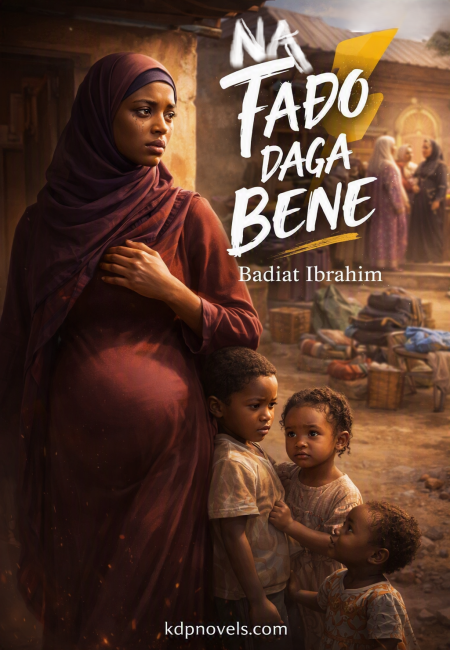
Tani has spent years being told that marriage is the one place where a woman belongs. She has endured disappointment, humiliation, poverty, childbirth, motherhood, and the painful judgment of people who know little about what happens behind a closed door. Now, with children depending on her and another child growing inside her, she finds herself trapped in a marriage where her husband appears increasingly distant, her co-wife takes control of the household, and her own dignity seems to matter less and less.
But Tani has not yet reached the end of her story.
When Kaila announces that he is bringing another wife into the family, he does something far more painful than simply taking another wife. He orders Tani and her children out of their room so that the new woman can occupy it. To make matters worse, the woman he intends to marry is everything Tani believes she is being punished for not becoming: educated, fashionable, confident, financially comfortable, and professionally established.
For a woman who has already been blamed for the collapse of four marriages, this could be the final blow.
Or it could be the moment she finally begins to understand that survival does not always mean remaining where one is being broken.
Summary
Tani's life is introduced through the ordinary chaos of a Muslim household preparing for Eid. While other families are preparing to celebrate in comfort, she is struggling to keep her home running with almost nothing. Her children need their hair done, clothes need washing, food needs preparing, and household responsibilities continue piling up. She is heavily pregnant, yet there is little room for rest. Her life revolves around her children, domestic work, and trying to stretch whatever little money reaches her hands far enough to keep everyone going.
Behind this seemingly ordinary household is a much deeper wound. Tani has already experienced four failed marriages, and her family has begun to treat the breakdown of those marriages as evidence that something must be wrong with her. Rather than receiving sympathy, she is repeatedly reminded that another failed marriage would bring shame upon the family. Her father even threatens her with consequences if she leaves her current husband. Tani therefore remains in a marriage that has increasingly become a source of emotional pain, partly because she fears what awaits her if she returns to her parents' home.
Her relationship with Kaila becomes even more complicated because of Hajiyayye, another woman in the household whose presence constantly reminds Tani of her husband's divided affection. Tani witnesses behavior between Kaila and Hajiyayye that leaves her devastated and humiliated. Yet instead of confronting the situation openly, she retreats into silence, tears, prayer, and work. She continues cooking, caring for the children, observing her religious duties, and performing the responsibilities expected of her while carrying a growing sense that her place in the household is becoming increasingly insignificant.
Then comes the announcement that changes everything. Kaila reveals that he intends to marry Bilkisa, an educated and professionally established woman whom he considers more sophisticated and suitable for the life he wants. His comparison between Bilkisa and Tani cuts deeper than the announcement itself. Tani is reminded that her education was interrupted, that poverty has limited her choices, and that her appearance has suffered because she spends nearly all her time caring for children and managing a household without adequate support.
But Kaila's decision does not stop with bringing another woman into the family. He demands Tani's room for the new bride. Tani and her children are forced to move into a cramped room in the compound, where they must share limited space with their belongings. The humiliation is made worse by the excitement of those around her who see the arrival of the new bride as something to celebrate.
As Tani struggles to understand how her life reached this point, her childhood connections begin to reappear. A reunion with former schoolmates offers her a glimpse of a woman she might have become if circumstances had been different. The planned gathering in Bauchi becomes more than a simple reunion. It represents a brief opportunity for Tani to reconnect with her past, her identity, and people who knew her before marriage after marriage gradually consumed the person she once was.
Yet even this small hope comes with danger. Her family continues to pressure her to remain married at all costs. Her mother warns her not to provoke Kaila into another divorce, while Tani herself insists that she will remain in the marriage regardless of what happens. She is terrified of returning home as another divorced woman. She is terrified of being blamed again. Most of all, she fears what will happen to her children if she walks away.
And somewhere beneath all that fear is a question Tani can no longer silence: How much of herself must a woman sacrifice before survival becomes another form of suffering?
Genre
Na Faɗo Daga Bene... Na Zarce Rijiya is primarily a Hausa domestic drama and emotional family novel, with strong elements of marital conflict, polygamy, social commentary, psychological drama, motherhood, poverty, and suspense.
The story does not depend solely on romantic relationships to create tension. Its strongest conflicts emerge from family expectations, unequal treatment, economic hardship, social judgment, co-wife rivalry, and the emotional consequences of repeated marital breakdown.
It is a story designed to make readers question the things society often tells women to endure silently.
Setting
The story is deeply rooted in Jos, Plateau State, particularly within a Hausa Muslim community where different cultures, ethnic groups, religions, and social classes intersect.
The domestic setting is especially important. Tani's compound becomes almost like a character of its own. The cramped rooms, shared courtyard, well, kitchen, children's belongings, washing, cooking, Eid preparations, neighborhood conversations, and constant movement of family members create an intimate picture of everyday life.
The story also moves beyond the household to places such as the Eid prayer ground, the surrounding streets of Jos, Tani's family home, and eventually Bauchi, where her former schoolmates plan to reunite.
These locations allow the novel to move between two worlds. One is the world Tani is currently trapped inside, while the other represents memories, possibilities, friendships, and the person she once was.
Core Themes
Marriage and Female Survival
At the center of the novel is a difficult examination of marriage and what happens when society places the responsibility for keeping a marriage alive almost entirely on the woman.
Tani's experiences force readers to question whether staying married at any cost is always a sign of strength, or whether there are situations where leaving can actually be an act of courage.
Polygamy and Jealousy
Kaila's decision to marry again introduces a complex emotional battle. Tani is not simply dealing with the arrival of another woman. She must also confront the humiliation of being compared with someone who appears to possess qualities that society considers more desirable.
The novel explores how polygamy can affect dignity, security, intimacy, and the emotional stability of women within a household.
Poverty and Inequality
Tani's poverty is not presented as a background detail. It influences almost every decision she makes.
From struggling to provide for her children to negotiating the price of their Eid hairstyles, clothing, food, and household necessities, the story shows how financial hardship can limit a person's ability to defend themselves or make independent choices.
Motherhood
Tani's children are one of the strongest reasons she continues enduring her circumstances.
Her life revolves around them. She washes for them, feeds them, dresses them, cares for them, takes them to the barbers and hairdressers, worries about their future, and constantly calculates how her decisions will affect them.
Her motherhood becomes both her greatest source of strength and one of the chains keeping her inside a painful marriage.
Social Judgment
Tani is constantly aware of what people will say.
A divorced woman is easily blamed. A woman who leaves a marriage can be called difficult, disobedient, or immoral. A woman who remains can be accused of weakness. Through Tani's internal struggles, the novel explores the impossible standards placed upon women.
Education and Social Class
Bilkisa's arrival creates another important contrast.
Bilkisa is educated, employed, fashionable, and financially secure. Tani sees in her the opportunities that she herself never received. The comparison is therefore not merely about beauty or attractiveness. It is also about access, education, confidence, and social status.
Dignity
Perhaps the most painful question running beneath the story is whether Tani can maintain her dignity while living in an environment that repeatedly diminishes her.
She may lack money, education, and social power, but she still possesses a sense of self that refuses to disappear completely.
Key Characters
Tani
Tani is the emotional center of the story.
She is a mother, a wife, a woman carrying the scars of four failed marriages, and someone desperately trying to protect her children from the instability surrounding her.
She is not portrayed as perfect. She is exhausted, vulnerable, sometimes uncertain, and frequently overwhelmed. Yet her greatest quality is her resilience. Even when she is emotionally shattered, she continues moving, cooking, cleaning, praying, caring for her children, and trying to survive.
Her greatest internal conflict is between endurance and freedom.
Kaila
Kaila is Tani's husband, a man whose treatment of his wife exposes the complicated power dynamics within their marriage.
He is capable of providing, socializing, building a livelihood, and presenting himself as a successful man, but his behavior toward Tani reveals another side of him. His comparisons, anger, demands, and decision to bring another wife into the household force Tani to confront how little control she actually has over her own marital life.
His character creates one of the central questions of the novel: Can a man provide for a household while simultaneously destroying the emotional security of the woman within it?
Hajiyayye
Hajiyayye is one of the most significant sources of tension inside Tani's household.
She is confident, fashionable, comfortable with her position, and deeply connected to Kaila. Her presence makes Tani feel increasingly invisible.
She is not simply a stereotypical rival. Her character represents the painful competition that can develop between women when affection, status, comfort, and a man's attention become limited resources within the same household.
Bilkisa
Bilkisa represents the future Kaila believes he wants.
She is educated, professionally established, stylish, and confident. Her introduction into the story immediately changes the balance of power within the household.
For Tani, Bilkisa is not simply another wife. She becomes a mirror reflecting everything Tani believes she has lost.
Sabira
Sabira serves as one of Tani's emotional outlets.
Unlike the people who simply tell Tani to endure, Sabira challenges her to think about freedom and self-preservation. Her conversations with Tani expose the difference between what society expects from women and what women sometimes need in order to survive.
Tani's Children
Sulaiman, Shafi'i, Sani, Balaraba, Amina, and Hauwa give the story another emotional dimension.
They are not merely background characters. Their needs shape Tani's decisions, strengthen her determination, and make the consequences of every marital conflict much more serious.
Analytics and Insight
The most compelling element of Na Faɗo Daga Bene... Na Zarce Rijiya is its portrayal of a woman whose suffering is not caused by one single event.
Tani's problems accumulate gradually.
Poverty adds pressure. Failed marriages add shame. Family expectations add fear. Motherhood adds responsibility. Polygamy adds emotional insecurity. Lack of education limits her opportunities. Her husband's behavior weakens her confidence. Social judgment makes leaving frightening.
Each individual problem might be survivable. Together, they create a situation that becomes increasingly difficult to escape.
The title itself suggests an escalation of hardship. Falling from one difficult situation only to encounter something even worse captures the emotional direction of Tani's journey. Every time she thinks she has reached the lowest point, another challenge appears.
This makes the novel particularly interesting because readers are not simply waiting to discover whether Tani will remain married or leave. They are waiting to discover what kind of woman she will become after everything she has endured.
The story also provides a strong social commentary on the pressures placed upon Hausa women, particularly divorced women and women who are expected to preserve marriages regardless of personal cost. It examines the tension between cultural expectations and individual dignity without reducing the characters to simple heroes and villains.
Most importantly, the story leaves readers with an uncomfortable question: when a society teaches a woman that returning home is failure, where is she supposed to go when her marriage becomes unbearable?
Why Readers May Connect With This Story
Readers who enjoy emotionally intense Hausa family stories will find several layers to explore here.
There is marital drama, but there is also motherhood. There is jealousy, but there is also poverty. There is polygamy, but there is also social criticism. There are painful memories, but there are also moments of friendship and hope.
The Eid preparations at the beginning of the story make the later developments even more powerful. While everyone is preparing to celebrate, Tani is quietly carrying burdens that nobody around her fully understands.
Her story feels personal because the conflict grows out of ordinary things: food, clothing, children, household chores, money, family conversations, old friendships, and the seemingly simple question of where a woman is allowed to sleep inside her own husband's home.
That ordinary setting makes the emotional impact stronger.
A Deeper Look at Tani's Journey
Tani's journey is ultimately a battle for recognition.
She wants to be seen as more than a wife.
More than a mother.
More than a divorced woman.
More than the woman who could not make her marriages work.
She wants someone to acknowledge that she has feelings, dreams, fears, intelligence, and a life beyond the role society has assigned to her.
Her reunion with her former schoolmates becomes especially significant because it reconnects her with a version of herself that existed before the responsibilities of marriage and motherhood consumed her identity.
That reunion may appear small at first, but in a story like this, small doors can lead to very significant changes.
The Suspense Ahead
Kaila's planned marriage to Bilkisa has already changed Tani's position inside the household.
But the real question is what happens next.
Will Tani continue accepting every humiliation because she fears another divorce?
Will her family ever understand what she has endured?
Will Bilkisa become the new center of Kaila's world, or will she discover that the household she is entering is far more complicated than it appears?
What will happen when Tani's past catches up with her?
And perhaps most importantly, will Tani finally discover that protecting her children does not necessarily mean sacrificing herself?
The answers are waiting beyond the next page.
Quote
"Sometimes a woman does not remain because she is happy. She remains because the world has convinced her that leaving would be a greater punishment."
Final Verdict
Na Faɗo Daga Bene... Na Zarce Rijiya is an emotionally charged story about marriage, motherhood, poverty, polygamy, dignity, and the difficult choices women are forced to make when society gives them very few places to turn.
Tani's story is painful because it feels possible. Her struggles are built from ordinary realities that can gradually become extraordinary burdens. She is not fighting one enemy. She is fighting circumstances, expectations, memories, poverty, humiliation, and her own fear of what awaits her outside the marriage.
And just when she believes she has already experienced the worst that life can offer, another door opens.
Behind it waits a new wife, a new humiliation, an old friendship, a forgotten part of herself, and perhaps the beginning of the fight for a life she has spent years believing she does not deserve.







![<? $row['name']; ?>](https://kdpnovels.com/Public/thumb/225x325/ebook/2026/04/kdp-velvet-76-rayuwa-da-gi-i-0187303be8.webp)
![<? $row['name']; ?>](https://kdpnovels.com/Public/thumb/225x325/ebook/2026/04/kdp-velvet-78-karuwan-cikin-gida-book-2-4162a6ec19.webp)
![<? $row['name']; ?>](https://kdpnovels.com/Public/thumb/225x325/ebook/2026/04/kdp-velvet-79-ar-goggo-b3f15a0ce3.webp)
![<? $row['name']; ?>](https://kdpnovels.com/Public/thumb/225x325/ebook/2026/04/kdp-velvet-82-rayuwar-mace-e1d7de2487.webp)
![<? $row['name']; ?>](https://kdpnovels.com/Public/thumb/225x325/ebook/2026/04/kdp-velvet-83-rana-daya-book-1-beba7251c1.webp)
![<? $row['name']; ?>](https://kdpnovels.com/Public/thumb/225x325/ebook/2026/04/kdp-velvet-91-kida-a-ruwa-3-472106cedd.webp)
![<? $row['name']; ?>](https://kdpnovels.com/Public/thumb/225x325/ebook/2026/04/kdp-velvet-93-rainon-soja-book-1-286bef18e2.webp)
![<? $row['name']; ?>](https://kdpnovels.com/Public/thumb/225x325/ebook/2026/04/kdp-velvet-95-abunda-ke-boye-4c21700ec8.webp)
![<? $row['name']; ?>](https://kdpnovels.com/Public/thumb/225x325/ebook/2026/04/kdp-velvet-96-ranar-naka-complt-1a5ed3d476.webp)
![<? $row['name']; ?>](https://kdpnovels.com/Public/thumb/225x325/ebook/2026/04/kdp-velvet-97-cutarwa-complt-d352334231.webp)
![<? $row['name']; ?>](https://kdpnovels.com/Public/thumb/225x325/ebook/2026/04/kdp-velvet-98-babu-so-619172ab35.webp)
![<? $row['name']; ?>](https://kdpnovels.com/Public/thumb/225x325/ebook/2026/04/kdp-velvet-99-rayuwa-da-gi-i-076b92a60b.webp)
NA FAƊO DAGA BENE
by Badiat Ibrahim
Hook
What happens when a woman has already survived four broken marriages, only to discover that her fifth marriage may be leading her toward an even darker fate?
Tani has spent years being told that marriage is the one place where a woman belongs. She has endured disappointment, humiliation, poverty, childbirth, motherhood, and the painful judgment of people who know little about what happens behind a closed door. Now, with children depending on her and another child growing inside her, she finds herself trapped in a marriage where her husband appears increasingly distant, her co-wife takes control of the household, and her own dignity seems to matter less and less.
But Tani has not yet reached the end of her story.
When Kaila announces that he is bringing another wife into the family, he does something far more painful than simply taking another wife. He orders Tani and her children out of their room so that the new woman can occupy it. To make matters worse, the woman he intends to marry is everything Tani believes she is being punished for not becoming: educated, fashionable, confident, financially comfortable, and professionally established.
For a woman who has already been blamed for the collapse of four marriages, this could be the final blow.
Or it could be the moment she finally begins to understand that survival does not always mean remaining where one is being broken.
Summary
Tani's life is introduced through the ordinary chaos of a Muslim household preparing for Eid. While other families are preparing to celebrate in comfort, she is struggling to keep her home running with almost nothing. Her children need their hair done, clothes need washing, food needs preparing, and household responsibilities continue piling up. She is heavily pregnant, yet there is little room for rest. Her life revolves around her children, domestic work, and trying to stretch whatever little money reaches her hands far enough to keep everyone going.
Behind this seemingly ordinary household is a much deeper wound. Tani has already experienced four failed marriages, and her family has begun to treat the breakdown of those marriages as evidence that something must be wrong with her. Rather than receiving sympathy, she is repeatedly reminded that another failed marriage would bring shame upon the family. Her father even threatens her with consequences if she leaves her current husband. Tani therefore remains in a marriage that has increasingly become a source of emotional pain, partly because she fears what awaits her if she returns to her parents' home.
Her relationship with Kaila becomes even more complicated because of Hajiyayye, another woman in the household whose presence constantly reminds Tani of her husband's divided affection. Tani witnesses behavior between Kaila and Hajiyayye that leaves her devastated and humiliated. Yet instead of confronting the situation openly, she retreats into silence, tears, prayer, and work. She continues cooking, caring for the children, observing her religious duties, and performing the responsibilities expected of her while carrying a growing sense that her place in the household is becoming increasingly insignificant.
Then comes the announcement that changes everything. Kaila reveals that he intends to marry Bilkisa, an educated and professionally established woman whom he considers more sophisticated and suitable for the life he wants. His comparison between Bilkisa and Tani cuts deeper than the announcement itself. Tani is reminded that her education was interrupted, that poverty has limited her choices, and that her appearance has suffered because she spends nearly all her time caring for children and managing a household without adequate support.
But Kaila's decision does not stop with bringing another woman into the family. He demands Tani's room for the new bride. Tani and her children are forced to move into a cramped room in the compound, where they must share limited space with their belongings. The humiliation is made worse by the excitement of those around her who see the arrival of the new bride as something to celebrate.
As Tani struggles to understand how her life reached this point, her childhood connections begin to reappear. A reunion with former schoolmates offers her a glimpse of a woman she might have become if circumstances had been different. The planned gathering in Bauchi becomes more than a simple reunion. It represents a brief opportunity for Tani to reconnect with her past, her identity, and people who knew her before marriage after marriage gradually consumed the person she once was.
Yet even this small hope comes with danger. Her family continues to pressure her to remain married at all costs. Her mother warns her not to provoke Kaila into another divorce, while Tani herself insists that she will remain in the marriage regardless of what happens. She is terrified of returning home as another divorced woman. She is terrified of being blamed again. Most of all, she fears what will happen to her children if she walks away.
And somewhere beneath all that fear is a question Tani can no longer silence: How much of herself must a woman sacrifice before survival becomes another form of suffering?
Genre
Na Faɗo Daga Bene... Na Zarce Rijiya is primarily a Hausa domestic drama and emotional family novel, with strong elements of marital conflict, polygamy, social commentary, psychological drama, motherhood, poverty, and suspense.
The story does not depend solely on romantic relationships to create tension. Its strongest conflicts emerge from family expectations, unequal treatment, economic hardship, social judgment, co-wife rivalry, and the emotional consequences of repeated marital breakdown.
It is a story designed to make readers question the things society often tells women to endure silently.
Setting
The story is deeply rooted in Jos, Plateau State, particularly within a Hausa Muslim community where different cultures, ethnic groups, religions, and social classes intersect.
The domestic setting is especially important. Tani's compound becomes almost like a character of its own. The cramped rooms, shared courtyard, well, kitchen, children's belongings, washing, cooking, Eid preparations, neighborhood conversations, and constant movement of family members create an intimate picture of everyday life.
The story also moves beyond the household to places such as the Eid prayer ground, the surrounding streets of Jos, Tani's family home, and eventually Bauchi, where her former schoolmates plan to reunite.
These locations allow the novel to move between two worlds. One is the world Tani is currently trapped inside, while the other represents memories, possibilities, friendships, and the person she once was.
Core Themes
Marriage and Female Survival
At the center of the novel is a difficult examination of marriage and what happens when society places the responsibility for keeping a marriage alive almost entirely on the woman.
Tani's experiences force readers to question whether staying married at any cost is always a sign of strength, or whether there are situations where leaving can actually be an act of courage.
Polygamy and Jealousy
Kaila's decision to marry again introduces a complex emotional battle. Tani is not simply dealing with the arrival of another woman. She must also confront the humiliation of being compared with someone who appears to possess qualities that society considers more desirable.
The novel explores how polygamy can affect dignity, security, intimacy, and the emotional stability of women within a household.
Poverty and Inequality
Tani's poverty is not presented as a background detail. It influences almost every decision she makes.
From struggling to provide for her children to negotiating the price of their Eid hairstyles, clothing, food, and household necessities, the story shows how financial hardship can limit a person's ability to defend themselves or make independent choices.
Motherhood
Tani's children are one of the strongest reasons she continues enduring her circumstances.
Her life revolves around them. She washes for them, feeds them, dresses them, cares for them, takes them to the barbers and hairdressers, worries about their future, and constantly calculates how her decisions will affect them.
Her motherhood becomes both her greatest source of strength and one of the chains keeping her inside a painful marriage.
Social Judgment
Tani is constantly aware of what people will say.
A divorced woman is easily blamed. A woman who leaves a marriage can be called difficult, disobedient, or immoral. A woman who remains can be accused of weakness. Through Tani's internal struggles, the novel explores the impossible standards placed upon women.
Education and Social Class
Bilkisa's arrival creates another important contrast.
Bilkisa is educated, employed, fashionable, and financially secure. Tani sees in her the opportunities that she herself never received. The comparison is therefore not merely about beauty or attractiveness. It is also about access, education, confidence, and social status.
Dignity
Perhaps the most painful question running beneath the story is whether Tani can maintain her dignity while living in an environment that repeatedly diminishes her.
She may lack money, education, and social power, but she still possesses a sense of self that refuses to disappear completely.
Key Characters
Tani
Tani is the emotional center of the story.
She is a mother, a wife, a woman carrying the scars of four failed marriages, and someone desperately trying to protect her children from the instability surrounding her.
She is not portrayed as perfect. She is exhausted, vulnerable, sometimes uncertain, and frequently overwhelmed. Yet her greatest quality is her resilience. Even when she is emotionally shattered, she continues moving, cooking, cleaning, praying, caring for her children, and trying to survive.
Her greatest internal conflict is between endurance and freedom.
Kaila
Kaila is Tani's husband, a man whose treatment of his wife exposes the complicated power dynamics within their marriage.
He is capable of providing, socializing, building a livelihood, and presenting himself as a successful man, but his behavior toward Tani reveals another side of him. His comparisons, anger, demands, and decision to bring another wife into the household force Tani to confront how little control she actually has over her own marital life.
His character creates one of the central questions of the novel: Can a man provide for a household while simultaneously destroying the emotional security of the woman within it?
Hajiyayye
Hajiyayye is one of the most significant sources of tension inside Tani's household.
She is confident, fashionable, comfortable with her position, and deeply connected to Kaila. Her presence makes Tani feel increasingly invisible.
She is not simply a stereotypical rival. Her character represents the painful competition that can develop between women when affection, status, comfort, and a man's attention become limited resources within the same household.
Bilkisa
Bilkisa represents the future Kaila believes he wants.
She is educated, professionally established, stylish, and confident. Her introduction into the story immediately changes the balance of power within the household.
For Tani, Bilkisa is not simply another wife. She becomes a mirror reflecting everything Tani believes she has lost.
Sabira
Sabira serves as one of Tani's emotional outlets.
Unlike the people who simply tell Tani to endure, Sabira challenges her to think about freedom and self-preservation. Her conversations with Tani expose the difference between what society expects from women and what women sometimes need in order to survive.
Tani's Children
Sulaiman, Shafi'i, Sani, Balaraba, Amina, and Hauwa give the story another emotional dimension.
They are not merely background characters. Their needs shape Tani's decisions, strengthen her determination, and make the consequences of every marital conflict much more serious.
Analytics and Insight
The most compelling element of Na Faɗo Daga Bene... Na Zarce Rijiya is its portrayal of a woman whose suffering is not caused by one single event.
Tani's problems accumulate gradually.
Poverty adds pressure. Failed marriages add shame. Family expectations add fear. Motherhood adds responsibility. Polygamy adds emotional insecurity. Lack of education limits her opportunities. Her husband's behavior weakens her confidence. Social judgment makes leaving frightening.
Each individual problem might be survivable. Together, they create a situation that becomes increasingly difficult to escape.
The title itself suggests an escalation of hardship. Falling from one difficult situation only to encounter something even worse captures the emotional direction of Tani's journey. Every time she thinks she has reached the lowest point, another challenge appears.
This makes the novel particularly interesting because readers are not simply waiting to discover whether Tani will remain married or leave. They are waiting to discover what kind of woman she will become after everything she has endured.
The story also provides a strong social commentary on the pressures placed upon Hausa women, particularly divorced women and women who are expected to preserve marriages regardless of personal cost. It examines the tension between cultural expectations and individual dignity without reducing the characters to simple heroes and villains.
Most importantly, the story leaves readers with an uncomfortable question: when a society teaches a woman that returning home is failure, where is she supposed to go when her marriage becomes unbearable?
Why Readers May Connect With This Story
Readers who enjoy emotionally intense Hausa family stories will find several layers to explore here.
There is marital drama, but there is also motherhood. There is jealousy, but there is also poverty. There is polygamy, but there is also social criticism. There are painful memories, but there are also moments of friendship and hope.
The Eid preparations at the beginning of the story make the later developments even more powerful. While everyone is preparing to celebrate, Tani is quietly carrying burdens that nobody around her fully understands.
Her story feels personal because the conflict grows out of ordinary things: food, clothing, children, household chores, money, family conversations, old friendships, and the seemingly simple question of where a woman is allowed to sleep inside her own husband's home.
That ordinary setting makes the emotional impact stronger.
A Deeper Look at Tani's Journey
Tani's journey is ultimately a battle for recognition.
She wants to be seen as more than a wife.
More than a mother.
More than a divorced woman.
More than the woman who could not make her marriages work.
She wants someone to acknowledge that she has feelings, dreams, fears, intelligence, and a life beyond the role society has assigned to her.
Her reunion with her former schoolmates becomes especially significant because it reconnects her with a version of herself that existed before the responsibilities of marriage and motherhood consumed her identity.
That reunion may appear small at first, but in a story like this, small doors can lead to very significant changes.
The Suspense Ahead
Kaila's planned marriage to Bilkisa has already changed Tani's position inside the household.
But the real question is what happens next.
Will Tani continue accepting every humiliation because she fears another divorce?
Will her family ever understand what she has endured?
Will Bilkisa become the new center of Kaila's world, or will she discover that the household she is entering is far more complicated than it appears?
What will happen when Tani's past catches up with her?
And perhaps most importantly, will Tani finally discover that protecting her children does not necessarily mean sacrificing herself?
The answers are waiting beyond the next page.
Quote
"Sometimes a woman does not remain because she is happy. She remains because the world has convinced her that leaving would be a greater punishment."
Final Verdict
Na Faɗo Daga Bene... Na Zarce Rijiya is an emotionally charged story about marriage, motherhood, poverty, polygamy, dignity, and the difficult choices women are forced to make when society gives them very few places to turn.
Tani's story is painful because it feels possible. Her struggles are built from ordinary realities that can gradually become extraordinary burdens. She is not fighting one enemy. She is fighting circumstances, expectations, memories, poverty, humiliation, and her own fear of what awaits her outside the marriage.
And just when she believes she has already experienced the worst that life can offer, another door opens.
Behind it waits a new wife, a new humiliation, an old friendship, a forgotten part of herself, and perhaps the beginning of the fight for a life she has spent years believing she does not deserve.