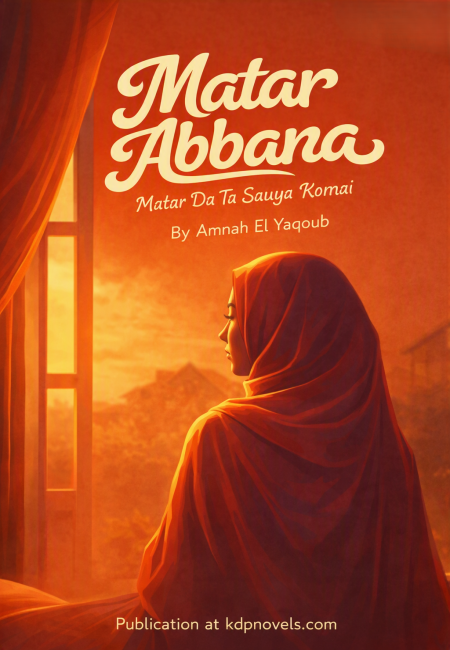
What happens when two completely different worlds are destined to cross paths?
On one side is Hafeeza, a young girl carrying responsibilities far beyond her age. She sells kosai to survive, helps her injured guardian, studies, memorizes the Qur'an, and quietly carries the weight of a difficult home life. On the other side is Hafeezu, a wealthy, reserved young man whose grandmother is desperately searching for a way to bring marriage, happiness, and new life into his world.
Neither of them knows what the future has prepared.
But sometimes, the greatest love stories do not begin with a meeting. They begin with two lives struggling separately until fate decides that their paths must finally collide.
MATAR ABBANA (Luv Story) is a Hausa romantic drama filled with family tension, emotional hardship, faith, humor, sacrifice, and the kind of suspense that makes you wonder what will happen when these two very different worlds finally meet.
Novel Summary
Hafeeza's life is far from easy. She is young, hardworking, disciplined, and deeply attached to the Qur'an, yet much of her daily existence revolves around survival. While other girls her age may have fewer responsibilities, Hafeeza spends her days preparing and selling kosai, doing household chores, helping Inna Ta Rasulu, attending Islamic school, memorizing the Qur'an, and finding whatever small opportunity she can to earn money. Her strength is impressive, but beneath that strength is a young woman who has already experienced loss and hardship.
Her relationship with Inna Ta Rasulu adds another emotional layer to her life. Inna depends heavily on Hafeeza, sometimes appreciating her sacrifices and sometimes speaking to her in ways that leave deep emotional wounds. Hafeeza rarely responds with anger. Instead, she turns inward, finding comfort in prayer, Qur'anic recitation, and the responsibilities she has accepted. The story gradually reveals how much she has sacrificed without demanding recognition for it.
Meanwhile, in another part of the city, Hajiya Kaka is troubled by a completely different problem. Her grandson Hafeezu is already twenty-eight, successful, and apparently has everything he needs except a wife. His refusal to entertain marriage discussions frustrates his grandmother, who dreams of seeing children running around their home. Hafeezu, however, is distant and extremely reserved. Every attempt to discuss marriage seems to irritate him, leaving his grandmother wondering what has changed him so deeply.
As the story develops, the contrast between Hafeeza's modest life and Hafeezu's privileged world becomes increasingly important. One household struggles with money, work, grief, and survival, while the other struggles with loneliness, expectations, family pressure, and the search for a suitable marriage. The novel creates curiosity by showing both worlds separately before revealing how their stories are connected.
At the heart of everything is the question of whether two people from such different circumstances can find understanding, affection, and genuine companionship. With family secrets, personal struggles, religious values, social expectations, and the possibility of an unexpected relationship ahead, MATAR ABBANA promises a journey where love is only one part of a much larger story.
What Is MATAR ABBANA About?
MATAR ABBANA is a Hausa romantic drama that combines romance with family storytelling, social realities, Islamic values, personal sacrifice, and emotional conflict.
Rather than presenting romance as something that exists separately from everyday life, the novel places its characters inside realistic family and community environments. The characters work, study, argue, pray, worry about money, care for relatives, deal with expectations, and face the ordinary pressures of life.
That makes the developing relationship more interesting because the characters are not introduced as perfect people living perfect lives. They come with responsibilities, weaknesses, personalities, family histories, and emotional burdens.
The novel also creates a strong contrast between two central environments. Hafeeza's world is humble and demanding, while Hafeezu's world appears considerably more comfortable but is affected by a different kind of emptiness. Their circumstances may be different, but both stories contain something missing.
Genre
MATAR ABBANA (Luv Story) falls primarily under:
Hausa Romance Novel | Romantic Drama | Family Drama | Emotional Fiction | Islamic-Themed Romance | Social Drama
Readers who enjoy Hausa novels involving marriage, family relationships, emotional struggles, hardworking female protagonists, wealthy families, Islamic values, and slow-building romantic tension are likely to find plenty to engage with here.
Setting
The story is set within a contemporary Nigerian Hausa-Muslim environment where family, religion, community reputation, marriage, education, and financial circumstances strongly influence the lives of the characters.
The contrast between Hafeeza's modest home and the affluent household surrounding Hajiya Kaka is particularly important. One setting gives the reader a close look at everyday struggle, while the other introduces wealth, family expectations, and the pressure surrounding a successful but unmarried young man.
The streets, schools, homes, markets, petrol stations, Islamic learning environment, and neighborhood interactions all help make the story feel grounded in everyday Northern Nigerian life.
Core Themes
Love and Marriage
Marriage is one of the strongest subjects surrounding the story. Hajiya Kaka's concern about Hafeezu's unmarried status shows how deeply marriage can be connected to family expectations.
However, the novel also raises a more important question: is marriage simply about finding someone, or is it about finding someone who can truly understand and complement you?
Sacrifice
Hafeeza represents sacrifice in many forms. She works, studies, memorizes the Qur'an, cares for others, and continues moving forward despite physical exhaustion and emotional difficulties.
Her character demonstrates that strength does not always look dramatic. Sometimes strength is simply waking up every morning and doing what needs to be done.
Faith
Islamic values are woven into Hafeeza's character and daily life. Her attachment to Qur'anic memorization is not merely a detail about her personality. It becomes part of the way she understands herself and copes with difficult circumstances.
Family Expectations
Hajiya Kaka's constant concern about marriage highlights the expectations placed on young adults by their families. Hafeezu's resistance creates another side of the issue, showing that what relatives believe is best may not always be what the individual wants.
Poverty and Survival
Hafeeza's life provides a realistic look at the dignity and difficulty of earning a living through small-scale work. Selling kosai may appear simple from the outside, but for her it represents responsibility, independence, and survival.
Loss and Grief
Several characters carry the consequences of losing people they loved. Hafeeza's family history, Inna Ta Rasulu's memories, and the grief surrounding other families demonstrate how loss can continue affecting people long after the person is gone.
Social Class
The story creates a noticeable divide between characters living in comfort and those struggling to meet everyday needs. This difference becomes especially significant when considering the possibility of relationships between people from different backgrounds.
Key Characters
Hafeeza
Hafeeza is one of the most compelling characters introduced in the story. She is young, beautiful, hardworking, reserved, and deeply committed to Qur'anic learning.
What makes her particularly interesting is the contradiction between her age and her responsibilities. She works like someone much older, takes care of household duties, helps Inna, attends school, memorizes the Qur'an, and still finds time to care for children around her.
She does not appear to expect sympathy. Instead, she quietly continues with her responsibilities.
Her kindness toward little Fadila is another indication of her nurturing personality. Even when she is exhausted, she still finds space in her heart to care for someone else.
Hafeezu
Hafeezu is introduced as a wealthy and mature young man who has reached the age where his family expects him to marry. Despite having apparently achieved stability in life, he remains unmarried and strongly resistant to his grandmother's repeated attempts to discuss marriage.
His reserved personality makes him intriguing. There is clearly more beneath his silence than simple stubbornness.
His story creates one of the novel's major questions: what exactly has made Hafeezu so unwilling to marry, and what kind of woman could possibly change his mind?
Inna Ta Rasulu
Inna Ta Rasulu is Hafeeza's guardian and an important figure in her life. Her character is complicated.
She can be demanding, sharp-tongued, and difficult with Hafeeza, yet her own circumstances reveal pain, grief, and hardship. Her life has been shaped by marriage, loss, poverty, and responsibility.
Her relationship with Hafeeza is therefore not simply one of kindness or cruelty. It is a complicated bond shaped by circumstances.
Hajiya Kaka
Hajiya Kaka brings humor, warmth, family wisdom, and constant commentary into the story.
She is particularly concerned about Hafeezu's future and cannot understand why a young man with everything going for him remains unmarried. Her determination to see him married creates several entertaining moments while also revealing how much she genuinely cares about him.
Hassana and Husna
The twin sisters provide a lighter and more playful side to the wealthy household.
Although they look remarkably alike, their personalities are noticeably different. Hassana is more open and sociable, while Husna is quieter and more reserved.
Their interactions with Hajiya Kaka provide humor while also helping the reader understand the family's relationships.
Kawu Hamza
Kawu Hamza represents another supportive presence in Hafeeza's life. His willingness to assist with money for her Qur'anic graduation demonstrates that Hafeeza is not completely alone.
His character also highlights the importance of community and extended family support in difficult circumstances.
Character Contrast
One of the novel's strongest storytelling techniques is its contrast between Hafeeza and Hafeezu.
Hafeeza has little materially, yet she possesses discipline, faith, compassion, and determination.
Hafeezu appears to have almost everything materially, yet he remains emotionally distant and resistant to marriage.
This contrast immediately creates an interesting foundation for the romance.
The question is not simply whether they will fall in love.
The deeper question is whether two people who have been shaped by completely different circumstances can recognize value in one another.
Analysis and Insight
The opening chapters deliberately take their time introducing the characters rather than immediately forcing the romance forward. This is important because the reader first gets to understand the lives surrounding the eventual relationship.
Hafeeza's introduction establishes her as more than a potential romantic character. She is a hardworking young woman with her own ambitions, faith, responsibilities, and personal struggles. Her character has a life before romance enters the picture.
Hafeezu's introduction works differently. Instead of immediately showing him in a romantic situation, the story introduces the pressure surrounding his unmarried status. His grandmother's concern gives readers an early indication that his relationship with marriage is complicated.
Another interesting element is the use of humor. Hajiya Kaka's conversations, her arguments with the younger characters, and the everyday situations surrounding Hafeeza's household prevent the story from becoming emotionally heavy all the time.
The novel also uses ordinary events to reveal character. A conversation about food, a broken vehicle, selling kosai, Qur'anic memorization, household chores, or even a family argument can reveal something about the people involved.
That approach gives the story a more natural rhythm and allows the characters to feel like people rather than simply pieces being moved toward a romantic plot.
Why Hafeeza's Character Stands Out
Hafeeza's greatest strength is not her beauty.
It is her resilience.
She is repeatedly placed in situations where it would be easy to complain, give up, or become bitter. Instead, she continues working and studying. Her relationship with the Qur'an gives her an emotional refuge, while her work gives her a sense of responsibility and purpose.
Her story also raises an important question about young women who grow up carrying responsibilities beyond their years.
How much can someone endure before the world finally notices what they have been carrying?
That question gives Hafeeza's eventual romantic journey additional emotional weight.
The Romance Beneath the Story
Although the title promises a love story, the novel does not rush straight into romance.
Instead, it builds the foundations first.
The reader sees Hafeeza's world. Then the reader sees Hafeezu's world.
The contrast creates anticipation.
Hafeeza is surrounded by responsibility. Hafeezu is surrounded by comfort but appears emotionally closed off. Hafeeza's life is defined by hard work and faith, while Hafeezu's life is complicated by expectations and his refusal to settle down.
This makes their eventual connection something readers will naturally want to understand.
What happens when a man who does not seem interested in marriage encounters a woman whose life is completely different from everything he knows?
That is where the real intrigue begins.
A Deeper Look at the Title
The title MATAR ABBANA immediately creates curiosity because it suggests a complicated relationship involving family, marriage, and identity.
Combined with the subtitle Luv Story, it signals that romance will be central to the novel, but the surrounding story suggests that this will not be a simple romantic journey.
The title itself invites questions.
Who is the "Matar Abbana"?
What circumstances connect her to the family?
Why is this particular relationship important?
And what will happen when family expectations collide with genuine feelings?
These unanswered questions are part of what makes the novel worth exploring.
Original Thematic Quote
"Sometimes the person carrying the heaviest burden is the one who says the least, and sometimes the life that looks empty from the outside is hiding the greatest story within."
This quote is an original thematic line inspired by the events and themes presented in the supplied chapters. It is not presented as a direct quotation from the novel.
What Readers Can Expect
Readers can expect a story that combines romance with everyday family life rather than relying solely on romantic scenes.
There are moments of humor, emotional pain, family disagreements, religious devotion, financial struggle, personal sacrifice, and questions surrounding marriage.
The story also gives considerable attention to character development. Hafeeza's journey is especially interesting because readers are given the opportunity to understand her circumstances before romance becomes the dominant focus.
For readers who enjoy Hausa novels where romance is surrounded by family drama, emotional challenges, Islamic values, and social realities, MATAR ABBANA offers several layers to explore.
Final Insight
At its heart, MATAR ABBANA (Luv Story) is about more than two people falling in love.
It is about the lives that shape people before they meet.
It is about a young woman who learns to survive through faith, work, patience, and responsibility.
It is about a man who has reached an age where everyone expects him to settle down, yet something inside him continues to resist.
It is about families that carry their own wounds, expectations, jokes, frustrations, and dreams.
And most importantly, it is about what happens when fate brings two very different worlds close enough to change each other.
MATAR ABBANA begins with ordinary lives, but the questions it raises suggest that something extraordinary may be waiting ahead.
Author: Amnah El Yaqoub Title: MATAR ABBANA Subtitle: Luv Story Genre: Hausa Romance, Romantic Drama, Family Drama, Islamic-Themed Fiction


![<? $row['name']; ?>](https://kdpnovels.com/Public/thumb/225x325/ebook/2026/04/kdp-velvet-76-rayuwa-da-gi-i-0187303be8.webp)
![<? $row['name']; ?>](https://kdpnovels.com/Public/thumb/225x325/ebook/2026/04/kdp-velvet-78-karuwan-cikin-gida-book-2-4162a6ec19.webp)
![<? $row['name']; ?>](https://kdpnovels.com/Public/thumb/225x325/ebook/2026/04/kdp-velvet-79-ar-goggo-b3f15a0ce3.webp)
![<? $row['name']; ?>](https://kdpnovels.com/Public/thumb/225x325/ebook/2026/04/kdp-velvet-82-rayuwar-mace-e1d7de2487.webp)
![<? $row['name']; ?>](https://kdpnovels.com/Public/thumb/225x325/ebook/2026/04/kdp-velvet-83-rana-daya-book-1-beba7251c1.webp)
![<? $row['name']; ?>](https://kdpnovels.com/Public/thumb/225x325/ebook/2026/04/kdp-velvet-91-kida-a-ruwa-3-472106cedd.webp)
![<? $row['name']; ?>](https://kdpnovels.com/Public/thumb/225x325/ebook/2026/04/kdp-velvet-93-rainon-soja-book-1-286bef18e2.webp)
![<? $row['name']; ?>](https://kdpnovels.com/Public/thumb/225x325/ebook/2026/04/kdp-velvet-95-abunda-ke-boye-4c21700ec8.webp)
![<? $row['name']; ?>](https://kdpnovels.com/Public/thumb/225x325/ebook/2026/04/kdp-velvet-96-ranar-naka-complt-1a5ed3d476.webp)
![<? $row['name']; ?>](https://kdpnovels.com/Public/thumb/225x325/ebook/2026/04/kdp-velvet-97-cutarwa-complt-d352334231.webp)
![<? $row['name']; ?>](https://kdpnovels.com/Public/thumb/225x325/ebook/2026/04/kdp-velvet-98-babu-so-619172ab35.webp)
![<? $row['name']; ?>](https://kdpnovels.com/Public/thumb/225x325/ebook/2026/04/kdp-velvet-99-rayuwa-da-gi-i-076b92a60b.webp)
MATAR ABBANA (Luv Story) by Amnah El Yaqoub
Hook
What happens when two completely different worlds are destined to cross paths?
On one side is Hafeeza, a young girl carrying responsibilities far beyond her age. She sells kosai to survive, helps her injured guardian, studies, memorizes the Qur'an, and quietly carries the weight of a difficult home life. On the other side is Hafeezu, a wealthy, reserved young man whose grandmother is desperately searching for a way to bring marriage, happiness, and new life into his world.
Neither of them knows what the future has prepared.
But sometimes, the greatest love stories do not begin with a meeting. They begin with two lives struggling separately until fate decides that their paths must finally collide.
MATAR ABBANA (Luv Story) is a Hausa romantic drama filled with family tension, emotional hardship, faith, humor, sacrifice, and the kind of suspense that makes you wonder what will happen when these two very different worlds finally meet.
Novel Summary
Hafeeza's life is far from easy. She is young, hardworking, disciplined, and deeply attached to the Qur'an, yet much of her daily existence revolves around survival. While other girls her age may have fewer responsibilities, Hafeeza spends her days preparing and selling kosai, doing household chores, helping Inna Ta Rasulu, attending Islamic school, memorizing the Qur'an, and finding whatever small opportunity she can to earn money. Her strength is impressive, but beneath that strength is a young woman who has already experienced loss and hardship.
Her relationship with Inna Ta Rasulu adds another emotional layer to her life. Inna depends heavily on Hafeeza, sometimes appreciating her sacrifices and sometimes speaking to her in ways that leave deep emotional wounds. Hafeeza rarely responds with anger. Instead, she turns inward, finding comfort in prayer, Qur'anic recitation, and the responsibilities she has accepted. The story gradually reveals how much she has sacrificed without demanding recognition for it.
Meanwhile, in another part of the city, Hajiya Kaka is troubled by a completely different problem. Her grandson Hafeezu is already twenty-eight, successful, and apparently has everything he needs except a wife. His refusal to entertain marriage discussions frustrates his grandmother, who dreams of seeing children running around their home. Hafeezu, however, is distant and extremely reserved. Every attempt to discuss marriage seems to irritate him, leaving his grandmother wondering what has changed him so deeply.
As the story develops, the contrast between Hafeeza's modest life and Hafeezu's privileged world becomes increasingly important. One household struggles with money, work, grief, and survival, while the other struggles with loneliness, expectations, family pressure, and the search for a suitable marriage. The novel creates curiosity by showing both worlds separately before revealing how their stories are connected.
At the heart of everything is the question of whether two people from such different circumstances can find understanding, affection, and genuine companionship. With family secrets, personal struggles, religious values, social expectations, and the possibility of an unexpected relationship ahead, MATAR ABBANA promises a journey where love is only one part of a much larger story.
What Is MATAR ABBANA About?
MATAR ABBANA is a Hausa romantic drama that combines romance with family storytelling, social realities, Islamic values, personal sacrifice, and emotional conflict.
Rather than presenting romance as something that exists separately from everyday life, the novel places its characters inside realistic family and community environments. The characters work, study, argue, pray, worry about money, care for relatives, deal with expectations, and face the ordinary pressures of life.
That makes the developing relationship more interesting because the characters are not introduced as perfect people living perfect lives. They come with responsibilities, weaknesses, personalities, family histories, and emotional burdens.
The novel also creates a strong contrast between two central environments. Hafeeza's world is humble and demanding, while Hafeezu's world appears considerably more comfortable but is affected by a different kind of emptiness. Their circumstances may be different, but both stories contain something missing.
Genre
MATAR ABBANA (Luv Story) falls primarily under:
Hausa Romance Novel | Romantic Drama | Family Drama | Emotional Fiction | Islamic-Themed Romance | Social Drama
Readers who enjoy Hausa novels involving marriage, family relationships, emotional struggles, hardworking female protagonists, wealthy families, Islamic values, and slow-building romantic tension are likely to find plenty to engage with here.
Setting
The story is set within a contemporary Nigerian Hausa-Muslim environment where family, religion, community reputation, marriage, education, and financial circumstances strongly influence the lives of the characters.
The contrast between Hafeeza's modest home and the affluent household surrounding Hajiya Kaka is particularly important. One setting gives the reader a close look at everyday struggle, while the other introduces wealth, family expectations, and the pressure surrounding a successful but unmarried young man.
The streets, schools, homes, markets, petrol stations, Islamic learning environment, and neighborhood interactions all help make the story feel grounded in everyday Northern Nigerian life.
Core Themes
Love and Marriage
Marriage is one of the strongest subjects surrounding the story. Hajiya Kaka's concern about Hafeezu's unmarried status shows how deeply marriage can be connected to family expectations.
However, the novel also raises a more important question: is marriage simply about finding someone, or is it about finding someone who can truly understand and complement you?
Sacrifice
Hafeeza represents sacrifice in many forms. She works, studies, memorizes the Qur'an, cares for others, and continues moving forward despite physical exhaustion and emotional difficulties.
Her character demonstrates that strength does not always look dramatic. Sometimes strength is simply waking up every morning and doing what needs to be done.
Faith
Islamic values are woven into Hafeeza's character and daily life. Her attachment to Qur'anic memorization is not merely a detail about her personality. It becomes part of the way she understands herself and copes with difficult circumstances.
Family Expectations
Hajiya Kaka's constant concern about marriage highlights the expectations placed on young adults by their families. Hafeezu's resistance creates another side of the issue, showing that what relatives believe is best may not always be what the individual wants.
Poverty and Survival
Hafeeza's life provides a realistic look at the dignity and difficulty of earning a living through small-scale work. Selling kosai may appear simple from the outside, but for her it represents responsibility, independence, and survival.
Loss and Grief
Several characters carry the consequences of losing people they loved. Hafeeza's family history, Inna Ta Rasulu's memories, and the grief surrounding other families demonstrate how loss can continue affecting people long after the person is gone.
Social Class
The story creates a noticeable divide between characters living in comfort and those struggling to meet everyday needs. This difference becomes especially significant when considering the possibility of relationships between people from different backgrounds.
Key Characters
Hafeeza
Hafeeza is one of the most compelling characters introduced in the story. She is young, beautiful, hardworking, reserved, and deeply committed to Qur'anic learning.
What makes her particularly interesting is the contradiction between her age and her responsibilities. She works like someone much older, takes care of household duties, helps Inna, attends school, memorizes the Qur'an, and still finds time to care for children around her.
She does not appear to expect sympathy. Instead, she quietly continues with her responsibilities.
Her kindness toward little Fadila is another indication of her nurturing personality. Even when she is exhausted, she still finds space in her heart to care for someone else.
Hafeezu
Hafeezu is introduced as a wealthy and mature young man who has reached the age where his family expects him to marry. Despite having apparently achieved stability in life, he remains unmarried and strongly resistant to his grandmother's repeated attempts to discuss marriage.
His reserved personality makes him intriguing. There is clearly more beneath his silence than simple stubbornness.
His story creates one of the novel's major questions: what exactly has made Hafeezu so unwilling to marry, and what kind of woman could possibly change his mind?
Inna Ta Rasulu
Inna Ta Rasulu is Hafeeza's guardian and an important figure in her life. Her character is complicated.
She can be demanding, sharp-tongued, and difficult with Hafeeza, yet her own circumstances reveal pain, grief, and hardship. Her life has been shaped by marriage, loss, poverty, and responsibility.
Her relationship with Hafeeza is therefore not simply one of kindness or cruelty. It is a complicated bond shaped by circumstances.
Hajiya Kaka
Hajiya Kaka brings humor, warmth, family wisdom, and constant commentary into the story.
She is particularly concerned about Hafeezu's future and cannot understand why a young man with everything going for him remains unmarried. Her determination to see him married creates several entertaining moments while also revealing how much she genuinely cares about him.
Hassana and Husna
The twin sisters provide a lighter and more playful side to the wealthy household.
Although they look remarkably alike, their personalities are noticeably different. Hassana is more open and sociable, while Husna is quieter and more reserved.
Their interactions with Hajiya Kaka provide humor while also helping the reader understand the family's relationships.
Kawu Hamza
Kawu Hamza represents another supportive presence in Hafeeza's life. His willingness to assist with money for her Qur'anic graduation demonstrates that Hafeeza is not completely alone.
His character also highlights the importance of community and extended family support in difficult circumstances.
Character Contrast
One of the novel's strongest storytelling techniques is its contrast between Hafeeza and Hafeezu.
Hafeeza has little materially, yet she possesses discipline, faith, compassion, and determination.
Hafeezu appears to have almost everything materially, yet he remains emotionally distant and resistant to marriage.
This contrast immediately creates an interesting foundation for the romance.
The question is not simply whether they will fall in love.
The deeper question is whether two people who have been shaped by completely different circumstances can recognize value in one another.
Analysis and Insight
The opening chapters deliberately take their time introducing the characters rather than immediately forcing the romance forward. This is important because the reader first gets to understand the lives surrounding the eventual relationship.
Hafeeza's introduction establishes her as more than a potential romantic character. She is a hardworking young woman with her own ambitions, faith, responsibilities, and personal struggles. Her character has a life before romance enters the picture.
Hafeezu's introduction works differently. Instead of immediately showing him in a romantic situation, the story introduces the pressure surrounding his unmarried status. His grandmother's concern gives readers an early indication that his relationship with marriage is complicated.
Another interesting element is the use of humor. Hajiya Kaka's conversations, her arguments with the younger characters, and the everyday situations surrounding Hafeeza's household prevent the story from becoming emotionally heavy all the time.
The novel also uses ordinary events to reveal character. A conversation about food, a broken vehicle, selling kosai, Qur'anic memorization, household chores, or even a family argument can reveal something about the people involved.
That approach gives the story a more natural rhythm and allows the characters to feel like people rather than simply pieces being moved toward a romantic plot.
Why Hafeeza's Character Stands Out
Hafeeza's greatest strength is not her beauty.
It is her resilience.
She is repeatedly placed in situations where it would be easy to complain, give up, or become bitter. Instead, she continues working and studying. Her relationship with the Qur'an gives her an emotional refuge, while her work gives her a sense of responsibility and purpose.
Her story also raises an important question about young women who grow up carrying responsibilities beyond their years.
How much can someone endure before the world finally notices what they have been carrying?
That question gives Hafeeza's eventual romantic journey additional emotional weight.
The Romance Beneath the Story
Although the title promises a love story, the novel does not rush straight into romance.
Instead, it builds the foundations first.
The reader sees Hafeeza's world. Then the reader sees Hafeezu's world.
The contrast creates anticipation.
Hafeeza is surrounded by responsibility. Hafeezu is surrounded by comfort but appears emotionally closed off. Hafeeza's life is defined by hard work and faith, while Hafeezu's life is complicated by expectations and his refusal to settle down.
This makes their eventual connection something readers will naturally want to understand.
What happens when a man who does not seem interested in marriage encounters a woman whose life is completely different from everything he knows?
That is where the real intrigue begins.
A Deeper Look at the Title
The title MATAR ABBANA immediately creates curiosity because it suggests a complicated relationship involving family, marriage, and identity.
Combined with the subtitle Luv Story, it signals that romance will be central to the novel, but the surrounding story suggests that this will not be a simple romantic journey.
The title itself invites questions.
Who is the "Matar Abbana"?
What circumstances connect her to the family?
Why is this particular relationship important?
And what will happen when family expectations collide with genuine feelings?
These unanswered questions are part of what makes the novel worth exploring.
Original Thematic Quote
This quote is an original thematic line inspired by the events and themes presented in the supplied chapters. It is not presented as a direct quotation from the novel.
What Readers Can Expect
Readers can expect a story that combines romance with everyday family life rather than relying solely on romantic scenes.
There are moments of humor, emotional pain, family disagreements, religious devotion, financial struggle, personal sacrifice, and questions surrounding marriage.
The story also gives considerable attention to character development. Hafeeza's journey is especially interesting because readers are given the opportunity to understand her circumstances before romance becomes the dominant focus.
For readers who enjoy Hausa novels where romance is surrounded by family drama, emotional challenges, Islamic values, and social realities, MATAR ABBANA offers several layers to explore.
Final Insight
At its heart, MATAR ABBANA (Luv Story) is about more than two people falling in love.
It is about the lives that shape people before they meet.
It is about a young woman who learns to survive through faith, work, patience, and responsibility.
It is about a man who has reached an age where everyone expects him to settle down, yet something inside him continues to resist.
It is about families that carry their own wounds, expectations, jokes, frustrations, and dreams.
And most importantly, it is about what happens when fate brings two very different worlds close enough to change each other.
MATAR ABBANA begins with ordinary lives, but the questions it raises suggest that something extraordinary may be waiting ahead.
Author: Amnah El Yaqoub
Title: MATAR ABBANA
Subtitle: Luv Story
Genre: Hausa Romance, Romantic Drama, Family Drama, Islamic-Themed Fiction