What happens when a child whom the world has rejected becomes the unexpected reason a powerful man begins to see life differently? Allah Gatan Bawa opens with Ilham, a young girl born with a physical disability that makes her an easy target for cruelty, mockery, and rejection. Yet behind her silence, innocent laughter, and helplessness lies a life shaped by a fate far greater than the people around her can understand. When tragedy tears away the little family she has, Ilham is left wandering the streets, exposed to hunger, humiliation, and unimaginable suffering.
But her story does not end there.
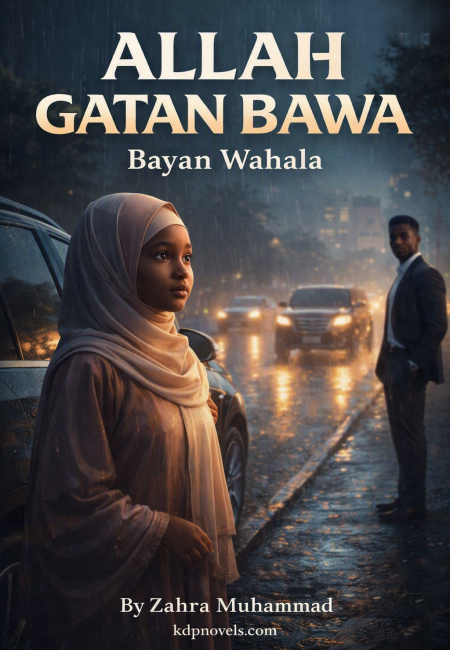
Years later, fate places her directly in the path of Anwar Umar Mutallib, the privileged, striking son of Nigeria's president, a young man whose life has been surrounded by wealth, influence, education, and comfort. Their worlds could not be more different. One has almost everything society can offer, while the other has been denied even the basic dignity of being treated as a human being. Yet one unexpected encounter during a rainy day is enough to create a connection that neither of them could have anticipated.
Summary
Allah Gatan Bawa begins with the painful childhood of Ilham Bukar Shetima, a girl whose physical disability makes her different from the other children around her. She struggles to walk normally, has difficulty speaking, and constantly drools because of her condition. Instead of receiving compassion, she becomes a source of amusement for the children in her neighborhood. They refuse to play with her and frequently tease her while she responds with innocent laughter, seemingly unaware of how cruel their treatment truly is. Her mother, Maryam, watches helplessly, constantly reminding herself that Allah is the protector of His servants.
Ilham's parents, Bukar and Maryam, have already endured enormous hardship. Bukar lost his parents and became separated from his brother during the violence that forced him to flee his home. During his journey as a displaced person, he met Maryam, another young woman who had lost her entire family. Their shared suffering eventually brought them together in marriage. After settling in Wudil, they built a modest life and were blessed with Ilham and later another daughter, Ameera. Despite poverty and the difficulties surrounding Ilham's condition, her parents love both girls deeply. Ameera becomes especially protective of her older sister, accompanying her to school and defending her whenever other children mock her.
Their fragile peace, however, does not last. When Ilham and Ameera finish primary school, their family is suddenly thrown out of their rented home because Bukar can no longer afford the accumulated rent. With their belongings thrown outside and their neighbors watching, the family leaves the town in tears. Their journey becomes even more devastating when Bukar is struck and killed by a vehicle while trying to find water for his family. Maryam suffers a severe stroke after witnessing the tragedy, and before long, she too dies. In the chaos that follows, Ameera is taken to safety while Ilham is unknowingly left behind.
From that moment, Ilham's life descends into an even darker struggle. She follows a group of Almajirai, believing they are somehow heading toward home, and ends up being carried to Kano. Hungry and alone, she receives a little food from a woman selling kunu and kosai, but her condition frightens the woman away. Ilham spends years on the streets, misunderstood and treated as though she is mentally ill. She is beaten, chased away, humiliated, and left without anyone to protect her. Her disability, poor hygiene, and inability to communicate clearly make her even more vulnerable. Meanwhile, Ameera grows up under the care of the village head, who treats her with affection and continues searching for her missing sister.
Then fate brings an entirely different world into Ilham's path. Anwar Umar Mutallib is the privileged son of Nigeria's president. Educated abroad, handsome, wealthy, disciplined in some aspects of his life yet deeply flawed in others, Anwar has little interest in emotional attachments. His father eventually forces him to return to Nigeria after becoming frustrated with his son's lifestyle abroad. During the journey from Kano to Abuja, Anwar unexpectedly sees Ilham standing by the roadside in the rain. Her attempt to run away from the approaching convoy ends with her slipping and falling, prompting Anwar to laugh at the sight. Yet his father notices something different in his son's reaction. For the first time, Anwar's laughter appears genuine and uninhibited. His father quietly orders that Ilham be brought along, unknowingly setting the stage for a life-changing encounter.
Genre and Setting
Allah Gatan Bawa is a dramatic Hausa novel built around family, hardship, faith, tragedy, social rejection, and the unpredictable ways in which fate can bring completely different lives together. The story moves between ordinary family life in northern Nigeria, displacement and poverty, the streets of Kano, and the privileged political environment surrounding the family of Nigeria's president.
Its setting creates a striking contrast. Ilham's world is one of poverty, disability, hunger, rejection, and survival, while Anwar's world is filled with political power, security personnel, expensive vehicles, foreign education, and privilege. This contrast gives the story much of its emotional tension and prepares the reader for the possibility that these two very different worlds may eventually collide in ways neither side expects.
Core Themes
At the heart of Allah Gatan Bawa is the idea of human dignity. Ilham's disability does not make her less deserving of love, respect, or compassion, yet much of society treats her as though her condition has made her less human. Through her experiences, the story examines how quickly people can reject someone who is different instead of trying to understand them.
Faith is another powerful thread throughout the narrative. Maryam repeatedly places her daughter's fate in Allah's hands, even when circumstances appear hopeless. The title itself reflects this belief that when human beings fail someone, Allah remains the ultimate source of protection and mercy.
The novel also explores family and sacrifice. Bukar and Maryam struggle to protect their children despite poverty, while Ameera's attachment to Ilham remains strong even after their separation. Their relationship demonstrates how deeply family bonds can survive even when circumstances attempt to destroy them.
Loss and resilience are equally central. Ilham loses her parents, her home, her security, and her place in society, yet she continues moving forward despite having almost no understanding of where life is taking her. Her survival becomes one of the story's most compelling mysteries.
The novel further examines the contrast between privilege and vulnerability. Anwar grows up surrounded by power and opportunity, while Ilham struggles simply to survive another day. Their eventual meeting raises important questions about how much people truly understand the suffering of those living outside their own social world.
Key Characters
Ilham Bukar Shetima is the emotional center of the story. Born with a physical disability, she is innocent, vulnerable, and unable to communicate easily with those around her. Her constant laughter makes her difficult for others to understand, but beneath that behavior is a young girl enduring circumstances no child should have to face. Her journey from a loved daughter to an abandoned street child forms the emotional foundation of the novel.
Bukar Shetima is Ilham's father, a hardworking man who has already experienced the loss of his own parents and separation from his brother. Despite his limited financial means, he works to provide for his family and refuses to see Ilham as a burden. His death becomes one of the major turning points in the story.
Maryam is Ilham's devoted mother. Her love for her daughter remains unwavering despite the cruelty Ilham faces from society. She understands that she cannot control the way people treat her child, but she continues caring for her and placing her trust in Allah. Her eventual death leaves Ilham and Ameera completely vulnerable.
Ameera is Ilham's younger sister and one of the few people who consistently stands beside her. She defends Ilham from other children and refuses to abandon her. Even after being separated from her sister, Ameera never stops thinking about her and continues hoping that she will be found.
Anwar Umar Mutallib enters the story from a completely different social world. As the son of the Nigerian president, he has wealth, education, status, and access to almost everything he wants. His personality is complicated, however, and his attitude toward relationships reveals a young man who has not yet learned to understand emotional responsibility. His unexpected encounter with Ilham may become the beginning of a transformation he never anticipated.
Anwar's Father is a powerful political figure who initially becomes frustrated with his son's lifestyle and insists that he return home. Yet he also demonstrates compassion when he notices Ilham during the journey. His decision to have her brought along becomes a crucial moment in the unfolding story.
Analytics and Insight
The strongest element of Allah Gatan Bawa is the enormous contrast between Ilham's vulnerability and Anwar's privilege. The story deliberately places two characters at opposite ends of society before allowing their paths to cross. This creates immediate curiosity because the reader naturally begins to wonder what could possibly connect a homeless disabled girl living on the streets with the son of Nigeria's president.
Ilham's journey also creates a powerful emotional progression. She begins as a beloved child within a struggling but loving family, loses everything through a chain of devastating events, and eventually becomes someone society barely recognizes. Her circumstances continually become worse, which makes her eventual encounter with Anwar feel less like an ordinary meeting and more like a turning point created by fate.
The story also uses irony effectively. Ilham is repeatedly treated as though she has no value, yet her presence eventually becomes significant to people far beyond the small community that rejected her. Meanwhile, Anwar has almost every material advantage but appears emotionally disconnected from many of the people around him. Their meeting creates the possibility that each may possess something the other lacks.
Most importantly, the opening chapters leave several questions deliberately unanswered. What will happen to Ilham now that she has been taken away from the streets? Will she finally find someone who understands her? Will Ameera ever reunite with her sister? What role will Anwar play in Ilham's future? And why does the story repeatedly remind the reader that Allah is the ultimate protector of the helpless?
These unanswered questions give Allah Gatan Bawa the kind of emotional suspense that encourages readers to continue beyond the opening pages.
A Quote from the Novel
“Allah gatan bawane.”
The simple statement carries the central spirit of Ilham's story. When family, society, wealth, and human compassion all fail, the novel asks the reader to consider whether there can still be hope for someone whom everyone else has abandoned.
Final Impression
Allah Gatan Bawa is ultimately a story about a girl who is repeatedly told by the world, through cruelty and rejection, that she does not matter. Yet the narrative steadily suggests that her life may carry a purpose far beyond what anyone around her can see. From the warmth of her childhood home to the loneliness of the streets of Kano, and finally into the powerful world of Anwar Umar Mutallib, Ilham's journey is filled with loss, faith, unexpected encounters, and unanswered questions.
Her story has only just begun, and the most important question is no longer whether Ilham will survive. It is what her survival will eventually mean for everyone whose life becomes connected to hers.








![<? $row['name']; ?>](https://kdpnovels.com/Public/thumb/225x325/ebook/2026/04/kdp-velvet-76-rayuwa-da-gi-i-0187303be8.webp)
![<? $row['name']; ?>](https://kdpnovels.com/Public/thumb/225x325/ebook/2026/04/kdp-velvet-78-karuwan-cikin-gida-book-2-4162a6ec19.webp)
![<? $row['name']; ?>](https://kdpnovels.com/Public/thumb/225x325/ebook/2026/04/kdp-velvet-79-ar-goggo-b3f15a0ce3.webp)
![<? $row['name']; ?>](https://kdpnovels.com/Public/thumb/225x325/ebook/2026/04/kdp-velvet-82-rayuwar-mace-e1d7de2487.webp)
![<? $row['name']; ?>](https://kdpnovels.com/Public/thumb/225x325/ebook/2026/04/kdp-velvet-83-rana-daya-book-1-beba7251c1.webp)
![<? $row['name']; ?>](https://kdpnovels.com/Public/thumb/225x325/ebook/2026/04/kdp-velvet-91-kida-a-ruwa-3-472106cedd.webp)
![<? $row['name']; ?>](https://kdpnovels.com/Public/thumb/225x325/ebook/2026/04/kdp-velvet-93-rainon-soja-book-1-286bef18e2.webp)
![<? $row['name']; ?>](https://kdpnovels.com/Public/thumb/225x325/ebook/2026/04/kdp-velvet-95-abunda-ke-boye-4c21700ec8.webp)
![<? $row['name']; ?>](https://kdpnovels.com/Public/thumb/225x325/ebook/2026/04/kdp-velvet-96-ranar-naka-complt-1a5ed3d476.webp)
![<? $row['name']; ?>](https://kdpnovels.com/Public/thumb/225x325/ebook/2026/04/kdp-velvet-97-cutarwa-complt-d352334231.webp)
![<? $row['name']; ?>](https://kdpnovels.com/Public/thumb/225x325/ebook/2026/04/kdp-velvet-98-babu-so-619172ab35.webp)
![<? $row['name']; ?>](https://kdpnovels.com/Public/thumb/225x325/ebook/2026/04/kdp-velvet-99-rayuwa-da-gi-i-076b92a60b.webp)
The Opening
What happens when a child whom the world has rejected becomes the unexpected reason a powerful man begins to see life differently? Allah Gatan Bawa opens with Ilham, a young girl born with a physical disability that makes her an easy target for cruelty, mockery, and rejection. Yet behind her silence, innocent laughter, and helplessness lies a life shaped by a fate far greater than the people around her can understand. When tragedy tears away the little family she has, Ilham is left wandering the streets, exposed to hunger, humiliation, and unimaginable suffering.
But her story does not end there.
Years later, fate places her directly in the path of Anwar Umar Mutallib, the privileged, striking son of Nigeria's president, a young man whose life has been surrounded by wealth, influence, education, and comfort. Their worlds could not be more different. One has almost everything society can offer, while the other has been denied even the basic dignity of being treated as a human being. Yet one unexpected encounter during a rainy day is enough to create a connection that neither of them could have anticipated.
Summary
Allah Gatan Bawa begins with the painful childhood of Ilham Bukar Shetima, a girl whose physical disability makes her different from the other children around her. She struggles to walk normally, has difficulty speaking, and constantly drools because of her condition. Instead of receiving compassion, she becomes a source of amusement for the children in her neighborhood. They refuse to play with her and frequently tease her while she responds with innocent laughter, seemingly unaware of how cruel their treatment truly is. Her mother, Maryam, watches helplessly, constantly reminding herself that Allah is the protector of His servants.
Ilham's parents, Bukar and Maryam, have already endured enormous hardship. Bukar lost his parents and became separated from his brother during the violence that forced him to flee his home. During his journey as a displaced person, he met Maryam, another young woman who had lost her entire family. Their shared suffering eventually brought them together in marriage. After settling in Wudil, they built a modest life and were blessed with Ilham and later another daughter, Ameera. Despite poverty and the difficulties surrounding Ilham's condition, her parents love both girls deeply. Ameera becomes especially protective of her older sister, accompanying her to school and defending her whenever other children mock her.
Their fragile peace, however, does not last. When Ilham and Ameera finish primary school, their family is suddenly thrown out of their rented home because Bukar can no longer afford the accumulated rent. With their belongings thrown outside and their neighbors watching, the family leaves the town in tears. Their journey becomes even more devastating when Bukar is struck and killed by a vehicle while trying to find water for his family. Maryam suffers a severe stroke after witnessing the tragedy, and before long, she too dies. In the chaos that follows, Ameera is taken to safety while Ilham is unknowingly left behind.
From that moment, Ilham's life descends into an even darker struggle. She follows a group of Almajirai, believing they are somehow heading toward home, and ends up being carried to Kano. Hungry and alone, she receives a little food from a woman selling kunu and kosai, but her condition frightens the woman away. Ilham spends years on the streets, misunderstood and treated as though she is mentally ill. She is beaten, chased away, humiliated, and left without anyone to protect her. Her disability, poor hygiene, and inability to communicate clearly make her even more vulnerable. Meanwhile, Ameera grows up under the care of the village head, who treats her with affection and continues searching for her missing sister.
Then fate brings an entirely different world into Ilham's path. Anwar Umar Mutallib is the privileged son of Nigeria's president. Educated abroad, handsome, wealthy, disciplined in some aspects of his life yet deeply flawed in others, Anwar has little interest in emotional attachments. His father eventually forces him to return to Nigeria after becoming frustrated with his son's lifestyle abroad. During the journey from Kano to Abuja, Anwar unexpectedly sees Ilham standing by the roadside in the rain. Her attempt to run away from the approaching convoy ends with her slipping and falling, prompting Anwar to laugh at the sight. Yet his father notices something different in his son's reaction. For the first time, Anwar's laughter appears genuine and uninhibited. His father quietly orders that Ilham be brought along, unknowingly setting the stage for a life-changing encounter.
Genre and Setting
Allah Gatan Bawa is a dramatic Hausa novel built around family, hardship, faith, tragedy, social rejection, and the unpredictable ways in which fate can bring completely different lives together. The story moves between ordinary family life in northern Nigeria, displacement and poverty, the streets of Kano, and the privileged political environment surrounding the family of Nigeria's president.
Its setting creates a striking contrast. Ilham's world is one of poverty, disability, hunger, rejection, and survival, while Anwar's world is filled with political power, security personnel, expensive vehicles, foreign education, and privilege. This contrast gives the story much of its emotional tension and prepares the reader for the possibility that these two very different worlds may eventually collide in ways neither side expects.
Core Themes
At the heart of Allah Gatan Bawa is the idea of human dignity. Ilham's disability does not make her less deserving of love, respect, or compassion, yet much of society treats her as though her condition has made her less human. Through her experiences, the story examines how quickly people can reject someone who is different instead of trying to understand them.
Faith is another powerful thread throughout the narrative. Maryam repeatedly places her daughter's fate in Allah's hands, even when circumstances appear hopeless. The title itself reflects this belief that when human beings fail someone, Allah remains the ultimate source of protection and mercy.
The novel also explores family and sacrifice. Bukar and Maryam struggle to protect their children despite poverty, while Ameera's attachment to Ilham remains strong even after their separation. Their relationship demonstrates how deeply family bonds can survive even when circumstances attempt to destroy them.
Loss and resilience are equally central. Ilham loses her parents, her home, her security, and her place in society, yet she continues moving forward despite having almost no understanding of where life is taking her. Her survival becomes one of the story's most compelling mysteries.
The novel further examines the contrast between privilege and vulnerability. Anwar grows up surrounded by power and opportunity, while Ilham struggles simply to survive another day. Their eventual meeting raises important questions about how much people truly understand the suffering of those living outside their own social world.
Key Characters
Ilham Bukar Shetima is the emotional center of the story. Born with a physical disability, she is innocent, vulnerable, and unable to communicate easily with those around her. Her constant laughter makes her difficult for others to understand, but beneath that behavior is a young girl enduring circumstances no child should have to face. Her journey from a loved daughter to an abandoned street child forms the emotional foundation of the novel.
Bukar Shetima is Ilham's father, a hardworking man who has already experienced the loss of his own parents and separation from his brother. Despite his limited financial means, he works to provide for his family and refuses to see Ilham as a burden. His death becomes one of the major turning points in the story.
Maryam is Ilham's devoted mother. Her love for her daughter remains unwavering despite the cruelty Ilham faces from society. She understands that she cannot control the way people treat her child, but she continues caring for her and placing her trust in Allah. Her eventual death leaves Ilham and Ameera completely vulnerable.
Ameera is Ilham's younger sister and one of the few people who consistently stands beside her. She defends Ilham from other children and refuses to abandon her. Even after being separated from her sister, Ameera never stops thinking about her and continues hoping that she will be found.
Anwar Umar Mutallib enters the story from a completely different social world. As the son of the Nigerian president, he has wealth, education, status, and access to almost everything he wants. His personality is complicated, however, and his attitude toward relationships reveals a young man who has not yet learned to understand emotional responsibility. His unexpected encounter with Ilham may become the beginning of a transformation he never anticipated.
Anwar's Father is a powerful political figure who initially becomes frustrated with his son's lifestyle and insists that he return home. Yet he also demonstrates compassion when he notices Ilham during the journey. His decision to have her brought along becomes a crucial moment in the unfolding story.
Analytics and Insight
The strongest element of Allah Gatan Bawa is the enormous contrast between Ilham's vulnerability and Anwar's privilege. The story deliberately places two characters at opposite ends of society before allowing their paths to cross. This creates immediate curiosity because the reader naturally begins to wonder what could possibly connect a homeless disabled girl living on the streets with the son of Nigeria's president.
Ilham's journey also creates a powerful emotional progression. She begins as a beloved child within a struggling but loving family, loses everything through a chain of devastating events, and eventually becomes someone society barely recognizes. Her circumstances continually become worse, which makes her eventual encounter with Anwar feel less like an ordinary meeting and more like a turning point created by fate.
The story also uses irony effectively. Ilham is repeatedly treated as though she has no value, yet her presence eventually becomes significant to people far beyond the small community that rejected her. Meanwhile, Anwar has almost every material advantage but appears emotionally disconnected from many of the people around him. Their meeting creates the possibility that each may possess something the other lacks.
Most importantly, the opening chapters leave several questions deliberately unanswered. What will happen to Ilham now that she has been taken away from the streets? Will she finally find someone who understands her? Will Ameera ever reunite with her sister? What role will Anwar play in Ilham's future? And why does the story repeatedly remind the reader that Allah is the ultimate protector of the helpless?
These unanswered questions give Allah Gatan Bawa the kind of emotional suspense that encourages readers to continue beyond the opening pages.
A Quote from the Novel
The simple statement carries the central spirit of Ilham's story. When family, society, wealth, and human compassion all fail, the novel asks the reader to consider whether there can still be hope for someone whom everyone else has abandoned.
Final Impression
Allah Gatan Bawa is ultimately a story about a girl who is repeatedly told by the world, through cruelty and rejection, that she does not matter. Yet the narrative steadily suggests that her life may carry a purpose far beyond what anyone around her can see. From the warmth of her childhood home to the loneliness of the streets of Kano, and finally into the powerful world of Anwar Umar Mutallib, Ilham's journey is filled with loss, faith, unexpected encounters, and unanswered questions.
Her story has only just begun, and the most important question is no longer whether Ilham will survive. It is what her survival will eventually mean for everyone whose life becomes connected to hers.