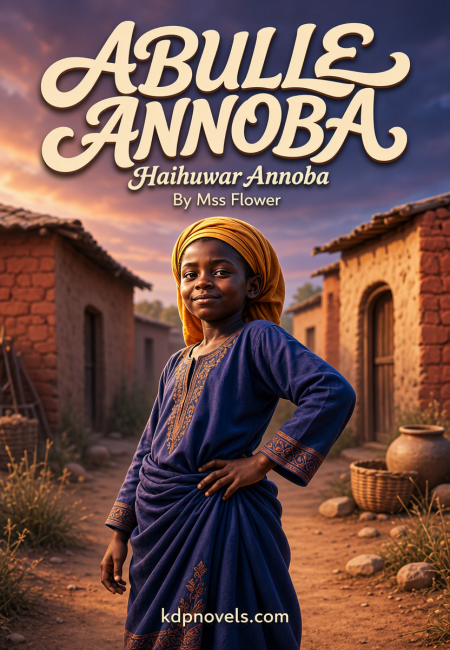
In a quiet village where people are accustomed to fear, gossip, and the authority of tradition, one twelve-year-old girl has become the person everyone dreads to meet. Her name is Abulle, but the villagers have given her another name: Annoba. Wherever she goes, trouble seems to follow, yet nobody can deny that she possesses a strange confidence, a sharp tongue, and an ability to turn an ordinary day into complete chaos.
But Abulle's story is not simply about a troublesome village girl. Behind the laughter, punishments, arguments, and bizarre encounters lies a much bigger question. What happens when a girl who has never been afraid of anyone is suddenly expected to choose a husband?
And when Abulle finally stands before the men of the village and announces the man she wants to marry, the entire community is left stunned. Her choice is not the young man everyone expects. It is the very man who has spent the story trying to survive her.
Summary
Abulle Annoba introduces readers to Abulle, a fearless and mischievous twelve-year-old whose presence is enough to send villagers running for cover. She moves through the community with the confidence of someone who believes nobody can challenge her. From demanding food and goods from frightened traders to frightening young men, teasing elders, and dragging people into ridiculous situations, Abulle has earned a reputation that makes her both entertaining and terrifying. Her mother, Hansatu, and father, Isuwalle, are particularly familiar with the consequences of raising such a difficult child.
Abulle's reputation grows with every encounter. She interferes in people's affairs, forces people to obey her instructions, and has little patience for anyone who refuses her demands. The villagers may complain about her, but many are also too frightened to confront her directly. Even the Mai Gari, the village leader, appears powerless whenever Abulle turns her attention toward him. Her strange authority becomes even more apparent when she begins selling traditional women's remedies throughout the village. What starts as an ordinary business soon becomes another source of chaos, as she visits household after household, collects money and debts, and leaves behind a trail of bewildered customers.
Her behavior becomes increasingly outrageous when she involves herself in village disputes. At the village gathering, Abulle encounters a young man and violently punishes him after believing he has behaved improperly toward a girl. The incident leaves the villagers shocked and reinforces the strange mixture of fear and fascination surrounding her. Yet while everyone worries about what Abulle might do next, her parents begin facing another problem. Their daughter is growing up, and the question of marriage is beginning to enter their conversations.
The idea of finding Abulle a husband becomes almost impossible to imagine. Who would willingly marry a girl whom an entire village calls an "Annoba"? Hansatu and Isuwalle wonder who could possibly tolerate her temperament, while Abulle herself seems to treat marriage as another opportunity for amusement. Eventually, she is asked to choose a husband from among the men presented before her. What follows is one of the story's most unexpected turns. Rather than selecting a young man, Abulle points toward the wealthy and influential Mai Gari and declares him her choice.
The consequences of that decision promise to transform the story completely. The man who once held authority over the village suddenly finds himself terrified of the future. Meanwhile, another storyline introduces Dr. Saddiq, a successful young doctor whose life appears far removed from Abulle's chaotic village world. Saddiq is devoted to his mother and determined to marry a respectable woman who will bring peace into his life. Yet family tensions, complicated relationships, and the question of marriage are already surrounding him. As the two worlds begin to unfold, the novel sets the stage for a story filled with comedy, family conflict, unexpected relationships, social expectations, and consequences that may be far more serious than Abulle realizes.
Novel Description: Genre and Setting
Abulle Annoba is a Hausa contemporary village drama that blends comedy, family drama, social satire, romance, marriage, cultural expectations, and suspense. Much of the early story unfolds within a close-knit rural community where everyone knows everyone else's business. The village setting allows the writers to explore traditional social structures, community authority, family relationships, courtship, marriage expectations, and the sometimes complicated relationship between an individual and the society around them.
The story also expands beyond the village through the introduction of Dr. Saddiq and his family. His sophisticated lifestyle, medical career, urban environment, and family circumstances provide a sharp contrast to Abulle's unpredictable world. This contrast creates an intriguing foundation for the events that may eventually connect the characters and their different realities.
Core Themes
At its heart, the novel explores family, marriage, responsibility, reputation, authority, and the consequences of individual behavior. Abulle's character challenges the expectations placed upon young girls within her community. She refuses to behave according to the rules everyone else follows, and her independence repeatedly creates conflict with adults and authority figures.
The novel also examines the complicated relationship between parents and their children. Hansatu and Isuwalle love Abulle, yet they are frequently overwhelmed by the consequences of raising her. Their conversations reveal frustration, regret, embarrassment, and concern about what her future might become.
Another important theme is marriage and social expectation. Abulle's eventual selection of a husband turns the traditional idea of courtship upside down. Instead of waiting for a man to choose her, she takes control of the decision herself. The resulting situation raises questions about power, compatibility, age, responsibility, and whether a marriage can survive when it begins under such extraordinary circumstances.
The novel also uses humor to explore serious social issues. Beneath the exaggerated situations and comic encounters are questions about community pressure, poverty, traditional remedies, reputation, family conflict, and the ways people respond when they feel they have lost control of their circumstances.
Key Characters
Abulle is the unmistakable center of the story. She is bold, mischievous, confrontational, fearless, and remarkably confident. At only twelve years old, she has already developed a reputation that makes adults and young men wary of crossing her. Her actions frequently create chaos, but her character is also energetic and unpredictable, making it difficult to know what she will do next.
Hansatu is Abulle's mother. She loves her daughter but is frequently exhausted by her behavior. Hansatu understands the trouble Abulle causes better than almost anyone and sometimes blames herself for how her daughter has turned out. Her relationship with Isuwalle also reveals the pressure that Abulle's behavior has placed on the entire family.
Isuwalle is Abulle's father. He is repeatedly caught between frustration and fear because of his daughter's actions. He knows the consequences of opposing her and often finds himself suffering the aftermath of her temper. His conversations with Hansatu reveal how deeply Abulle's reputation has affected their family.
Mai Gari is the village leader and one of the people most affected by Abulle's unpredictable behavior. Although he holds authority over the community, Abulle's presence frequently reduces that authority to nervousness and fear. Her decision to name him as her future husband creates one of the story's most startling developments.
Dr. Saddiq represents a very different world from Abulle's village environment. He is a successful doctor, devoted to his mother, and determined to find a wife with good character and self-control. His relationship with his family, particularly his mother and sister Sultana, introduces a separate layer of family drama that may become increasingly important as the story progresses.
Sultana is Saddiq's sister, whose illness brings him into a difficult confrontation with Umma. Her relationship with her brother demonstrates the affection between siblings, while the hostility surrounding her family creates another source of emotional tension.
Umma and Saddiq's mother represent two contrasting maternal influences in Saddiq's life. His mother is affectionate and supportive, while Umma's relationship with him is strained by suspicion and resentment. Their conflicts add another dimension to the novel's exploration of family.
Analytics & Insight
The most distinctive feature of Abulle Annoba is its central character. Abulle is deliberately written as a force of disruption. She does not merely participate in village events; she changes them. A simple encounter with a trader can become an argument. A visit to someone's house can become a confrontation. A village gathering can suddenly turn into a search for a husband.
The title itself, Abulle Annoba, captures this idea. "Annoba" evokes something people fear because of the damage it can cause, and the villagers' nickname for Abulle reflects the extraordinary reputation she has built around herself. Yet the story does not present her only as a source of trouble. Her confidence, humor, determination, and unusual sense of authority make her a character readers are likely to remember.
The narrative also creates suspense by constantly placing Abulle in situations where the consequences are difficult to predict. Her selection of Mai Gari as her husband is particularly significant because it changes the balance of power between them. A village leader who once appeared powerful is suddenly worried about what his own future might look like.
The introduction of Dr. Saddiq creates another layer of anticipation. His story initially appears separate from Abulle's, but the novel's emphasis on marriage, family expectations, and contrasting social environments creates room for their worlds to eventually intersect. That possibility gives the story a larger narrative horizon beyond the village comedy.
Ultimately, Abulle Annoba combines outrageous humor with family drama and marriage-related suspense. Readers are drawn in by Abulle's outrageous behavior, but the deeper appeal comes from wondering what will happen when someone so unpredictable is forced to confront consequences that cannot simply be laughed away.
A Thought from the Story
"Sometimes the person everyone fears becomes the person everyone must eventually face."
This idea captures the spirit of Abulle's journey. She may be the village's greatest source of trouble, but the real suspense lies in discovering what happens when her actions finally collide with love, marriage, family expectations, and consequences beyond her control.
Why Readers Will Want to Continue
Abulle Annoba is built around unpredictability. Nobody seems completely safe whenever Abulle enters the scene, and every ordinary encounter has the potential to become something much bigger. Her fearless personality creates humor, while the growing pressure surrounding marriage introduces a more serious question: can someone who has spent her entire life frightening everyone else survive the consequences of becoming someone's wife?
With village comedy, family tension, cultural expectations, unexpected relationships, and the introduction of a completely different world through Dr. Saddiq, the story promises more than laughter. It sets up a collision between personalities, families, and expectations that could change everything.
For readers who enjoy Hausa stories filled with comedy, dramatic family situations, village life, unpredictable characters, marriage complications, and suspenseful twists, Abulle Annoba offers a story designed to keep curiosity alive from one chapter to the next.





![<? $row['name']; ?>](https://kdpnovels.com/Public/thumb/225x325/ebook/2026/04/kdp-velvet-76-rayuwa-da-gi-i-0187303be8.webp)
![<? $row['name']; ?>](https://kdpnovels.com/Public/thumb/225x325/ebook/2026/04/kdp-velvet-78-karuwan-cikin-gida-book-2-4162a6ec19.webp)
![<? $row['name']; ?>](https://kdpnovels.com/Public/thumb/225x325/ebook/2026/04/kdp-velvet-79-ar-goggo-b3f15a0ce3.webp)
![<? $row['name']; ?>](https://kdpnovels.com/Public/thumb/225x325/ebook/2026/04/kdp-velvet-82-rayuwar-mace-e1d7de2487.webp)
![<? $row['name']; ?>](https://kdpnovels.com/Public/thumb/225x325/ebook/2026/04/kdp-velvet-83-rana-daya-book-1-beba7251c1.webp)
![<? $row['name']; ?>](https://kdpnovels.com/Public/thumb/225x325/ebook/2026/04/kdp-velvet-91-kida-a-ruwa-3-472106cedd.webp)
![<? $row['name']; ?>](https://kdpnovels.com/Public/thumb/225x325/ebook/2026/04/kdp-velvet-93-rainon-soja-book-1-286bef18e2.webp)
![<? $row['name']; ?>](https://kdpnovels.com/Public/thumb/225x325/ebook/2026/04/kdp-velvet-95-abunda-ke-boye-4c21700ec8.webp)
![<? $row['name']; ?>](https://kdpnovels.com/Public/thumb/225x325/ebook/2026/04/kdp-velvet-96-ranar-naka-complt-1a5ed3d476.webp)
![<? $row['name']; ?>](https://kdpnovels.com/Public/thumb/225x325/ebook/2026/04/kdp-velvet-97-cutarwa-complt-d352334231.webp)
![<? $row['name']; ?>](https://kdpnovels.com/Public/thumb/225x325/ebook/2026/04/kdp-velvet-98-babu-so-619172ab35.webp)
ABULLE ANNOBA
By Mss Flower & Mrs Abdool
The Opening
In a quiet village where people are accustomed to fear, gossip, and the authority of tradition, one twelve-year-old girl has become the person everyone dreads to meet. Her name is Abulle, but the villagers have given her another name: Annoba. Wherever she goes, trouble seems to follow, yet nobody can deny that she possesses a strange confidence, a sharp tongue, and an ability to turn an ordinary day into complete chaos.
But Abulle's story is not simply about a troublesome village girl. Behind the laughter, punishments, arguments, and bizarre encounters lies a much bigger question. What happens when a girl who has never been afraid of anyone is suddenly expected to choose a husband?
And when Abulle finally stands before the men of the village and announces the man she wants to marry, the entire community is left stunned. Her choice is not the young man everyone expects. It is the very man who has spent the story trying to survive her.
Summary
Abulle Annoba introduces readers to Abulle, a fearless and mischievous twelve-year-old whose presence is enough to send villagers running for cover. She moves through the community with the confidence of someone who believes nobody can challenge her. From demanding food and goods from frightened traders to frightening young men, teasing elders, and dragging people into ridiculous situations, Abulle has earned a reputation that makes her both entertaining and terrifying. Her mother, Hansatu, and father, Isuwalle, are particularly familiar with the consequences of raising such a difficult child.
Abulle's reputation grows with every encounter. She interferes in people's affairs, forces people to obey her instructions, and has little patience for anyone who refuses her demands. The villagers may complain about her, but many are also too frightened to confront her directly. Even the Mai Gari, the village leader, appears powerless whenever Abulle turns her attention toward him. Her strange authority becomes even more apparent when she begins selling traditional women's remedies throughout the village. What starts as an ordinary business soon becomes another source of chaos, as she visits household after household, collects money and debts, and leaves behind a trail of bewildered customers.
Her behavior becomes increasingly outrageous when she involves herself in village disputes. At the village gathering, Abulle encounters a young man and violently punishes him after believing he has behaved improperly toward a girl. The incident leaves the villagers shocked and reinforces the strange mixture of fear and fascination surrounding her. Yet while everyone worries about what Abulle might do next, her parents begin facing another problem. Their daughter is growing up, and the question of marriage is beginning to enter their conversations.
The idea of finding Abulle a husband becomes almost impossible to imagine. Who would willingly marry a girl whom an entire village calls an "Annoba"? Hansatu and Isuwalle wonder who could possibly tolerate her temperament, while Abulle herself seems to treat marriage as another opportunity for amusement. Eventually, she is asked to choose a husband from among the men presented before her. What follows is one of the story's most unexpected turns. Rather than selecting a young man, Abulle points toward the wealthy and influential Mai Gari and declares him her choice.
The consequences of that decision promise to transform the story completely. The man who once held authority over the village suddenly finds himself terrified of the future. Meanwhile, another storyline introduces Dr. Saddiq, a successful young doctor whose life appears far removed from Abulle's chaotic village world. Saddiq is devoted to his mother and determined to marry a respectable woman who will bring peace into his life. Yet family tensions, complicated relationships, and the question of marriage are already surrounding him. As the two worlds begin to unfold, the novel sets the stage for a story filled with comedy, family conflict, unexpected relationships, social expectations, and consequences that may be far more serious than Abulle realizes.
Novel Description: Genre and Setting
Abulle Annoba is a Hausa contemporary village drama that blends comedy, family drama, social satire, romance, marriage, cultural expectations, and suspense. Much of the early story unfolds within a close-knit rural community where everyone knows everyone else's business. The village setting allows the writers to explore traditional social structures, community authority, family relationships, courtship, marriage expectations, and the sometimes complicated relationship between an individual and the society around them.
The story also expands beyond the village through the introduction of Dr. Saddiq and his family. His sophisticated lifestyle, medical career, urban environment, and family circumstances provide a sharp contrast to Abulle's unpredictable world. This contrast creates an intriguing foundation for the events that may eventually connect the characters and their different realities.
Core Themes
At its heart, the novel explores family, marriage, responsibility, reputation, authority, and the consequences of individual behavior. Abulle's character challenges the expectations placed upon young girls within her community. She refuses to behave according to the rules everyone else follows, and her independence repeatedly creates conflict with adults and authority figures.
The novel also examines the complicated relationship between parents and their children. Hansatu and Isuwalle love Abulle, yet they are frequently overwhelmed by the consequences of raising her. Their conversations reveal frustration, regret, embarrassment, and concern about what her future might become.
Another important theme is marriage and social expectation. Abulle's eventual selection of a husband turns the traditional idea of courtship upside down. Instead of waiting for a man to choose her, she takes control of the decision herself. The resulting situation raises questions about power, compatibility, age, responsibility, and whether a marriage can survive when it begins under such extraordinary circumstances.
The novel also uses humor to explore serious social issues. Beneath the exaggerated situations and comic encounters are questions about community pressure, poverty, traditional remedies, reputation, family conflict, and the ways people respond when they feel they have lost control of their circumstances.
Key Characters
Abulle is the unmistakable center of the story. She is bold, mischievous, confrontational, fearless, and remarkably confident. At only twelve years old, she has already developed a reputation that makes adults and young men wary of crossing her. Her actions frequently create chaos, but her character is also energetic and unpredictable, making it difficult to know what she will do next.
Hansatu is Abulle's mother. She loves her daughter but is frequently exhausted by her behavior. Hansatu understands the trouble Abulle causes better than almost anyone and sometimes blames herself for how her daughter has turned out. Her relationship with Isuwalle also reveals the pressure that Abulle's behavior has placed on the entire family.
Isuwalle is Abulle's father. He is repeatedly caught between frustration and fear because of his daughter's actions. He knows the consequences of opposing her and often finds himself suffering the aftermath of her temper. His conversations with Hansatu reveal how deeply Abulle's reputation has affected their family.
Mai Gari is the village leader and one of the people most affected by Abulle's unpredictable behavior. Although he holds authority over the community, Abulle's presence frequently reduces that authority to nervousness and fear. Her decision to name him as her future husband creates one of the story's most startling developments.
Dr. Saddiq represents a very different world from Abulle's village environment. He is a successful doctor, devoted to his mother, and determined to find a wife with good character and self-control. His relationship with his family, particularly his mother and sister Sultana, introduces a separate layer of family drama that may become increasingly important as the story progresses.
Sultana is Saddiq's sister, whose illness brings him into a difficult confrontation with Umma. Her relationship with her brother demonstrates the affection between siblings, while the hostility surrounding her family creates another source of emotional tension.
Umma and Saddiq's mother represent two contrasting maternal influences in Saddiq's life. His mother is affectionate and supportive, while Umma's relationship with him is strained by suspicion and resentment. Their conflicts add another dimension to the novel's exploration of family.
Analytics & Insight
The most distinctive feature of Abulle Annoba is its central character. Abulle is deliberately written as a force of disruption. She does not merely participate in village events; she changes them. A simple encounter with a trader can become an argument. A visit to someone's house can become a confrontation. A village gathering can suddenly turn into a search for a husband.
The title itself, Abulle Annoba, captures this idea. "Annoba" evokes something people fear because of the damage it can cause, and the villagers' nickname for Abulle reflects the extraordinary reputation she has built around herself. Yet the story does not present her only as a source of trouble. Her confidence, humor, determination, and unusual sense of authority make her a character readers are likely to remember.
The narrative also creates suspense by constantly placing Abulle in situations where the consequences are difficult to predict. Her selection of Mai Gari as her husband is particularly significant because it changes the balance of power between them. A village leader who once appeared powerful is suddenly worried about what his own future might look like.
The introduction of Dr. Saddiq creates another layer of anticipation. His story initially appears separate from Abulle's, but the novel's emphasis on marriage, family expectations, and contrasting social environments creates room for their worlds to eventually intersect. That possibility gives the story a larger narrative horizon beyond the village comedy.
Ultimately, Abulle Annoba combines outrageous humor with family drama and marriage-related suspense. Readers are drawn in by Abulle's outrageous behavior, but the deeper appeal comes from wondering what will happen when someone so unpredictable is forced to confront consequences that cannot simply be laughed away.
A Thought from the Story
This idea captures the spirit of Abulle's journey. She may be the village's greatest source of trouble, but the real suspense lies in discovering what happens when her actions finally collide with love, marriage, family expectations, and consequences beyond her control.
Why Readers Will Want to Continue
Abulle Annoba is built around unpredictability. Nobody seems completely safe whenever Abulle enters the scene, and every ordinary encounter has the potential to become something much bigger. Her fearless personality creates humor, while the growing pressure surrounding marriage introduces a more serious question: can someone who has spent her entire life frightening everyone else survive the consequences of becoming someone's wife?
With village comedy, family tension, cultural expectations, unexpected relationships, and the introduction of a completely different world through Dr. Saddiq, the story promises more than laughter. It sets up a collision between personalities, families, and expectations that could change everything.
For readers who enjoy Hausa stories filled with comedy, dramatic family situations, village life, unpredictable characters, marriage complications, and suspenseful twists, Abulle Annoba offers a story designed to keep curiosity alive from one chapter to the next.